The Best Time to Visit the Namib Desert, Month by Month

The best time to visit the Namib Desert is May and September, at either end of the dry season, when the light is as clean as it is in July and the lodges at Sesriem still have rooms. That is the short answer. The longer one depends on whether you came for dunes, for wildlife, for photographs of a flooded pan, or simply for a week when the coast is not buried in fog until noon. Prices and departures for every month sit with the Namib Desert tour comparison on the homepage.
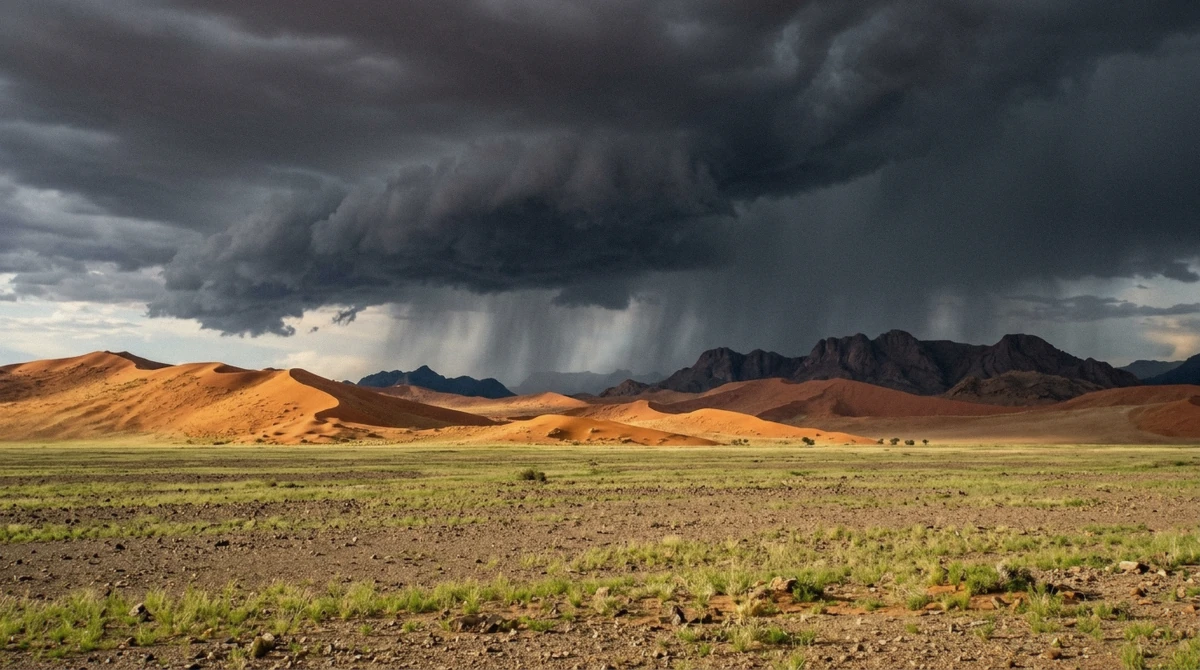
March over the escarpment. Twice a decade those storms put enough water into the Tsauchab to reach the pan at Sossusvlei.
Quick answer
May to October is the dry season and the right window for a first trip to the Namib Desert. Days average 27°C, mornings drop to 7°C, and the air stays clear. July and August are the busiest and most expensive months, so May, June, September and October give the same conditions with fewer people. November to March is hot, cheap and quiet, with days above 30°C and occasional storms that turn the desert green.
Key takeaways
- Best overall: May and September, with dry-season light and shoulder-season prices
- Best for Etosha game viewing: August to October, when animals concentrate at the waterholes
- Best for photography: February to April, when storms build over the escarpment and the pan sometimes floods
- Coldest mornings: June to August, with frost on the gravel plains and 5°C at sunrise
- Hottest: December to February, reaching 40°C at Sossusvlei by mid-afternoon
- Book six months ahead for July and August. Sesriem has a small bed base and it sells out
The Short Answer, and the Two Seasons Behind It
The Dry Season, May to October
This is the season people mean when they say Namibia. Skies stay clear for weeks, dust settles, and the temperature sits in a range where walking a dune at eight in the morning is a pleasure rather than a test.
Daytime highs run near 27°C across the desert, dropping to about 23°C in the depths of June and July and climbing back through the low thirties by October. Nights are the surprise. Sossusvlei falls to about 5°C in July, and the gravel plains hold frost on winter mornings. Anyone sleeping at Sesriem Campsite in a roof tent learns this the hard way.
Rain is close to irrelevant. Sossusvlei records about 104 mm a year and almost none of it falls in these months. The inner Namib averages as little as 2 mm annually, which is why the plants here drink fog instead.
The cost of all this is company. July and August coincide with European and South African school holidays, and the small lodges around Sesriem book out six months ahead.
The Green Season, November to March
The heat arrives first. Days climb past 30°C in November and reach 40°C at Sossusvlei by January, which changes how a day works: you climb at six, retreat by ten, and come out again at four.
Rain, when it comes, falls over the escarpment east of the dunes rather than on the sand. The Tsauchab and Kuiseb rise in flood, and the gravel plains turn green in a matter of days. Oryx calve, ostriches display, and the light picks up a drama it never has in the dry months: black cloud behind orange dune.
Every few years the Tsauchab reaches Sossusvlei and stands in the pan for a few weeks, with the dunes reflected in it. Photographers plan whole trips around a chance of that, knowing it might not happen.
Prices drop, lodges have space, and the roads stay open apart from occasional washouts on gravel. Wildlife disperses because water is everywhere, which is why Etosha is a poorer bet now.
What Each Month Feels Like on the Ground
Averages hide the texture of a month. This is what the calendar looks like to someone driving it.
January and February are the hot end. Sossusvlei runs to 36°C and the walk to Deadvlei stops being pleasant by nine. The escarpment builds cloud most afternoons and the light in the last hour is the best of the year. Swakopmund fills with Namibian families on holiday.
March and April cool down and green up. The gravel plains carry grass, oryx calves are on the ground, and the roads are quiet. April in particular is a month regulars book and rarely talk about.
May flips to dry. Nights fall through 9°C, the dust settles out of the air, and the first tour buses arrive. June and July are the coldest: 23°C to 24°C by day, 5°C to 6°C before dawn, frost on the plains, and an open game-drive vehicle at sunrise that will find every gap in your clothing.
August holds the same cold mornings with more people and higher rates. September is the turn: warmer days near 29°C, dry air, game concentrated at every waterhole in Etosha, and the peak crowds gone home.
October is hot and productive, the last month before rain when animals have nowhere else to drink. November and December build heat and cloud again, the first storms arrive in the east, and prices fall back to green-season levels.
The Shoulder Months Nobody Books
April and November sit between the two, and both are underrated.
April has the last of the green and the first of the dry: warm days near 30°C, cool nights, and the gravel plains still holding colour from whatever rain fell. Lodges have space. The light is good and the crowds have gone home.
November runs hotter, into the mid-thirties, with the first thunderheads building in the east most afternoons. It is the cheapest month before Christmas prices arrive and the desert has an atmosphere it lacks under a blank winter sky.
If your dates are flexible and your priority is not seeing another vehicle at Deadvlei, take April.
Namib Desert Month by Month
Bars show the average daytime high at Sossusvlei, the figure under each month is the overnight low. Colour marks the season. The coast at Swakopmund runs 10 to 15 degrees cooler than these numbers all year.
- 36°C day Jan 17°C
- 34°C day Feb 17°C
- 33°C day Mar 16°C
- 31°C day Apr 13°C
- 27°C day May 9°C
- 24°C day Jun 6°C
- 23°C day Jul 5°C
- 25°C day Aug 7°C
- 29°C day Sep 10°C
- 32°C day Oct 13°C
- 34°C day Nov 15°C
- 35°C day Dec 16°C
- Dry season, clear light, peak prices (May to October)
- Shoulder, warm and quiet (April, November)
- Green season, hot with storms (December to March)
Sossusvlei takes about 104 mm of rain a year, nearly all of it between February and April. Etosha, 500 km north, takes 418 mm and has a sharper wet season.
Choosing by What You Came For
For the Dunes and Deadvlei
May, June, September. Cool enough to climb Big Daddy without suffering, dry enough for clean light, and outside the July and August squeeze.
The thing that decides your photographs is not the month, it is the hour. The inner gate at Sesriem opens an hour before sunrise for guests staying inside the park, and that hour is when the dune faces still carry a shadow line. In June the sun clears the escarpment around 07:40, in December closer to 06:20, so a summer start is genuinely early.
By mid-morning in any month the light flattens and the pan turns into a glare. Nothing about the season changes that.
| Priority | Best months | Why |
|---|---|---|
| Dune climbing | May, June, September | Cool mornings, no crowds at the ridge |
| Deadvlei photography | February to April | Storm skies, and a chance the pan holds water |
| Etosha game viewing | August to October | Water sources gone, game at the waterholes |
| Birding at Walvis Bay | November to March | Palearctic migrants arrive in numbers |
| Stargazing | Any month | Little light pollution, driest air May to September |
| Lowest prices | January to March | Green season rates, and space everywhere |
For Wildlife
August to October, and it is not close. Etosha runs on the same logic as every dry-season park: rainfall averages 418 mm and falls between November and April, so by August the seasonal pans have gone and every animal walks to a permanent waterhole. You park at the water and wait.
October is the peak of that concentration and also the hottest pre-rain month, which is uncomfortable and productive in equal measure.
The green season flips it. Water lies everywhere, game scatters into thick bush, and the sightings drop off. What you get instead is newborn antelope, migrant birds and green backgrounds that photographers prize.
On the coast the calculation is different. Walvis Bay Lagoon holds over 150,000 birds year-round and the flamingo flocks peak near 50,000, but the Palearctic waders arrive from the Arctic between November and March, which makes the green season the better birding window.
The Coastal Fog and the Benguela Current
Swakopmund and Walvis Bay follow their own rules. The cold Benguela current keeps the coast between 15°C and 25°C all year and pushes fog up to 100 km inland on most nights of the year.
That fog is not a nuisance, it is the water supply. The inner Namib receives as little as 2 mm of rain a year, and the beetles, lichen, welwitschia and geckos that live there drink condensation instead. Some beetles stand head-down on a dune crest before dawn so the droplets run into their mouths.
That fog is why the coast can be grey and cold at nine in the morning while Sossusvlei, 350 km inland, is already at 30°C. It usually burns off by late morning. December to February gives the warmest, clearest coastal weather, which is also when Namibian holidaymakers fill Swakopmund.
Sandwich Harbour tours run year-round because the constraint there is the tide, not the season. What changes is comfort: a windproof jacket is useful in every month of the year on that beach.
For the Sky
The Namib has almost no light pollution and some of the driest air on the continent, which puts it among the best stargazing regions anywhere. The NamibRand reserve south of Sesriem holds Africa's only International Dark Sky Reserve.
Any month works. May to September gives the driest, steadiest air and the Milky Way core rises high through the middle of the night from June onward. Winter also brings the coldest nights, so plan for 5°C and a wind.
A balloon flight at sunrise takes off in the dark and lands to breakfast. Ask about the season when booking, since strong summer thermals cancel more flights than winter cold does.
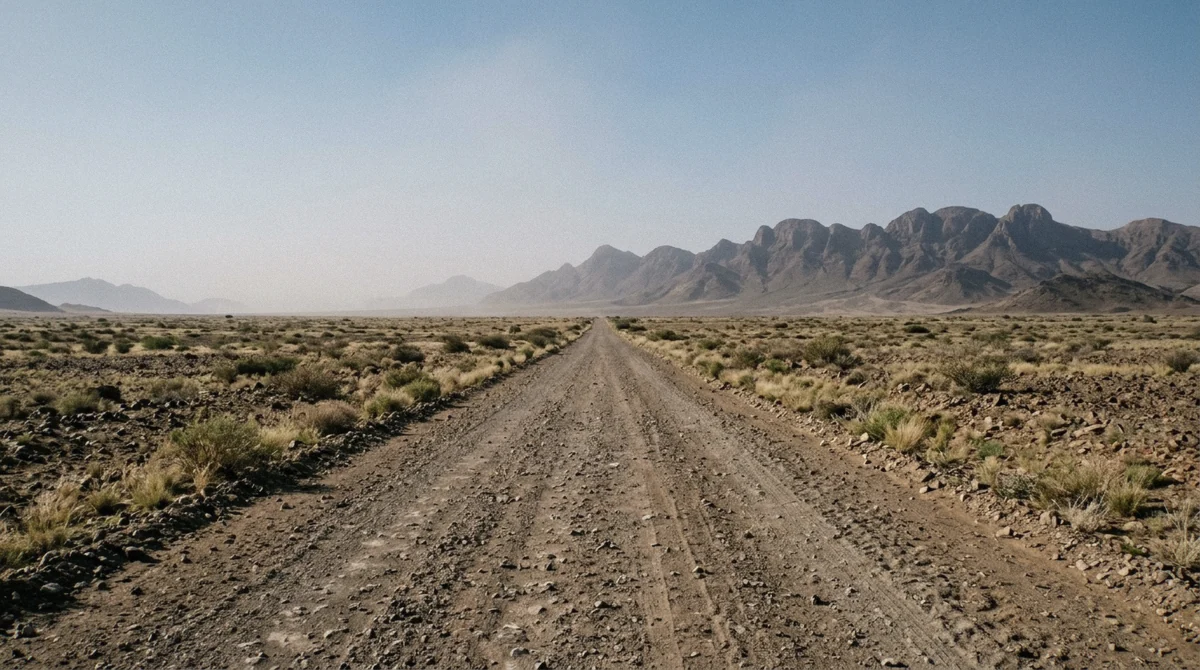
June on the C14. Dry-season gravel is fast and hard, which is why most rental damage in Namibia happens on roads that look easy.
Which Month Fits Your Trip
If you want the classic dry-season desert without the peak crowds
go in May or September: 27°C to 29°C days, clear light, and rooms still available at Sesriem
If wildlife is the point and Etosha is on the route
go in August, September or October, when the seasonal water is gone and game walks to the permanent waterholes
If you are chasing photographs rather than comfort
go between February and April for storm skies over the escarpment and a rare chance the Sossusvlei pan holds water
If the budget is tight and heat does not scare you
go from December to March, when lodge rates drop 20% to 40% and Deadvlei is empty at seven in the morning
If you only have the coast and a few days
any month works: Sandwich Harbour runs are set by the tide, not the season
Practical Planning
Booking Windows and Prices
Sesriem is the bottleneck. There are only four properties with access to the inner gate, and they sell out for July and August roughly six months ahead. Etosha's camps follow the same pattern.
Green-season rates run 20% to 40% below peak at most lodges, and availability is close to open. If your dates are fixed in high summer, book early anyway because the good lodges are small.
One cost applies whatever month you choose. Namibia raised park fees on 1 April 2026, and a foreign adult now pays N$280 per person per day at both Sossusvlei and Etosha, plus N$60 per vehicle. Fees run per calendar day, so a two-night stay is charged twice. Most guided tours include this, and the listing says so.
| Season | Lodge rates | Book ahead | Availability |
|---|---|---|---|
| July to August | Peak, highest of the year | 6 months | Sesriem and Etosha camps sell out |
| May, June, September, October | High but off-peak | 3 months | Comfortable, best rooms go early |
| April and November | Shoulder, 15% to 25% below peak | 4 to 6 weeks | Open almost everywhere |
| December to March | Green season, 20% to 40% below peak | 2 to 4 weeks | Open, except over Christmas week |
What to Pack, by Season
Layers matter more here than in most desert destinations, because the daily swing is 20 degrees and the coast disagrees with the interior.
- Dry season, May to September: fleece and windproof for mornings, shirt sleeves by nine, a beanie for open vehicles at dawn
- Green season, November to March: light long sleeves against sun rather than cold, and rain shell for escarpment storms
- Every month on the coast: windproof jacket, because Walvis Bay is cold when Sossusvlei is not
- Closed shoes for dune climbing, and sandals for everything else
- Sun cream, wide-brimmed hat and sunglasses, all of them non-negotiable
- Two litres of water per person per activity, more in October
- A sealed bag for camera gear. Sand and fog both get in
How Long the Trip Needs
Five days is the comfortable minimum for the coast and the dunes together: two nights on the coast, one long transfer, two nights at Sesriem.
Eight to ten days brings Etosha into range, since the park sits roughly 500 km north of the dune fields and deserves two nights of its own.
Anything shorter forces a choice. A three-day trip works well as either coast plus Sandwich Harbour or Windhoek plus Sossusvlei, and badly as both.
Is Namibia Safe to Visit
Yes, by the standards of the region and of most travellers' home countries. Namibia is politically stable, road violence is not a concern, and tourist areas see little crime beyond opportunistic theft in Windhoek and Swakopmund.
The genuine hazards are logistical. Gravel roads cause most tourist injuries here, almost always through speed. Distances between fuel stops run to 150 km or more. Heat and dehydration take people out on dune climbs every season, and cell coverage disappears between towns.
On health, malaria matters only in the north, including around Etosha, and only between November and June. The desert itself is malaria-free. Ask a travel clinic about prophylaxis for a wet-season trip north, and take routine vaccinations up to date. No yellow fever certificate is needed unless you arrive from an endemic country.
Questions About Timing a Namib Trip
What is the best month to visit Namibia?
September. It sits at the end of the dry season, so the desert light is clean and Etosha's game is concentrated at the waterholes, and it falls outside the July and August peak when lodges are full and rates are highest. May is the closest runner-up.
What is the Namib Desert temperature at night?
About 5°C at Sossusvlei in July, rising to around 17°C in January. Frost forms on the gravel plains on the coldest winter mornings. The coast is steadier, sitting near 12°C to 15°C at night year-round because the ocean moderates it.
Is September a good time to visit the Namib Desert?
It is one of the two best months. Days run near 29°C, mornings around 10°C, the air is dry, and Etosha's waterholes are at their busiest before the rain. Prices have dropped from the August peak and the lodges have space again.
When does it rain in the Namib Desert?
Between February and April, and rarely. Sossusvlei averages about 104 mm a year and the inner Namib as little as 2 mm. Most of the water that reaches the desert falls on the escarpment to the east and arrives down the Tsauchab and Kuiseb rivers.
Is it safe to visit Namibia now?
Yes. The country is stable and tourist areas are low-crime. The real risks are gravel roads taken too fast, long gaps between fuel stops, and heat on dune climbs. Drive slower than feels necessary and carry more water than you expect to drink.
Is Namibia or Botswana better to visit?
Namibia for landscape: dunes, canyons, coast and space, on good roads you can drive yourself. Botswana for wildlife density, especially the Okavango and Chobe, at higher cost and usually with fly-in camps. A first trip to southern Africa that wants scenery goes to Namibia.
What injections do I need for Namibia?
Routine vaccinations up to date, and typhoid and hepatitis A are commonly advised. Yellow fever proof is required only if you arrive from a country with transmission. Malaria prophylaxis is a separate discussion and applies to the north between November and June, not to the desert.
Can you see the Sossusvlei pan with water in it?
Occasionally, between February and April, when the Tsauchab River flows far enough to reach it. Several years usually pass between floods and no operator can promise one. When it happens the dunes reflect in the pan and every photographer in the country drives south.
When is the coast least foggy?
December to March gives the warmest and clearest coastal weather, though fog can roll in during any month. It usually clears by late morning. Sandwich Harbour tours run year-round because tides, not fog, set the schedule.
Which month has the fewest tourists?
February. It is the hottest month at Sossusvlei, schools are back everywhere, and the green season keeps most safari traffic away. You will have Deadvlei to yourself at seven in the morning and pay green-season rates for a lodge that costs double in August. The trade is 34°C by lunchtime.
Does the desert get cold enough to need a coat?
Yes, from May to September. Dawn at Sesriem runs 5°C to 9°C, the gravel plains hold frost in June and July, and an open vehicle moving at 60 km/h makes it feel colder still. Pack a fleece and a windproof layer even if the forecast for the afternoon says 25°C.
How far ahead should I book?
Six months for July and August, especially anything inside the gate at Sesriem or in Etosha's camps. Three months is comfortable for May, June, September and October. Green season from November to March can be arranged a few weeks out.
Does the season change what a tour costs?
Lodges and multi-day packages move with the season, dropping 20% to 40% between the July peak and the January low. Day tours barely move at all, because a half-day 4x4 or a game drive costs the operator the same fuel and the same guide in every month of the year.
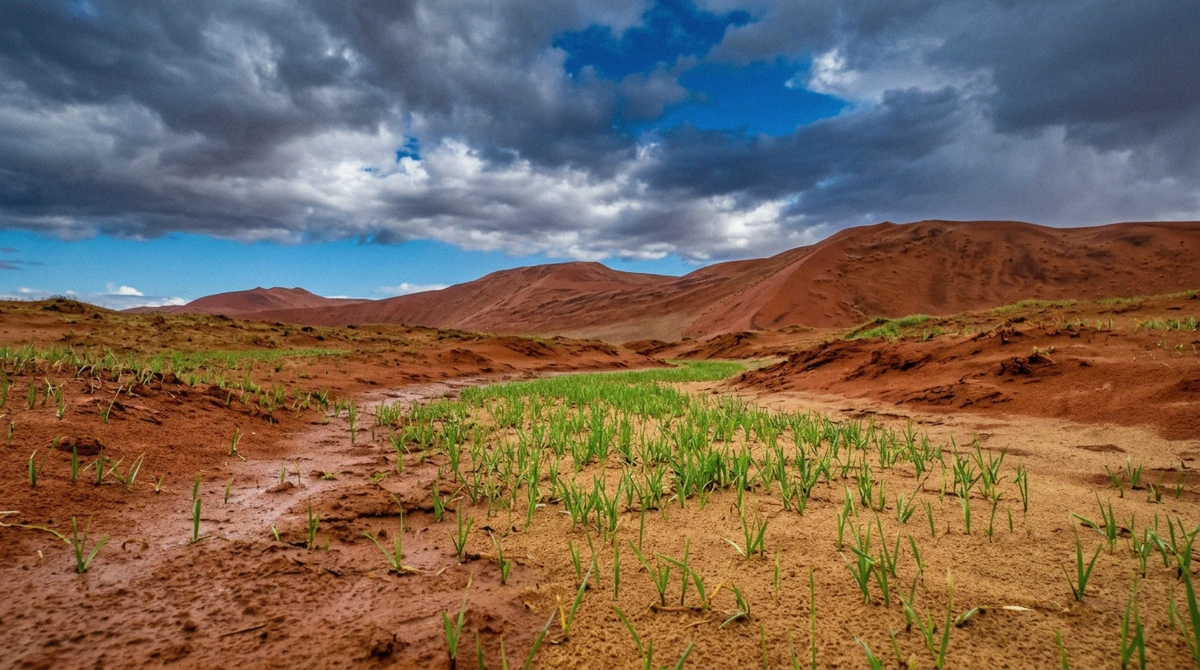
The weeks when the desert turns green
A Note on the Shoulder Months
April to May and November deserve a second look before you default to the dry winter peak. Daytime stays warm, rates at the inside-the-gate lodges soften, and the rare rains leave a green flush that lasts weeks and photographs beautifully against the red sand. The trade-off is honest: a storm can close a gravel road for a day.
If you would rather spend the savings on an extra night, where to stay near the Namib Desert compares every base.