Etosha National Park Tours: Game Drives, Waterholes and Multi-Day Safaris
Etosha National Park tours divide into two things that look similar on a listing page and feel nothing alike. A game drive booked from inside the park costs $138 and puts you at a waterhole at the hour animals come to drink. A day trip from Windhoek costs $423 and spends most of that day on the B1. This page sets out what each one covers, what the park charges on top, and which waterholes decide whether your morning works. Etosha sits about 500 km north of the dune fields, so it works as its own leg of a trip rather than an add-on to the Namib Desert tours on the coast.
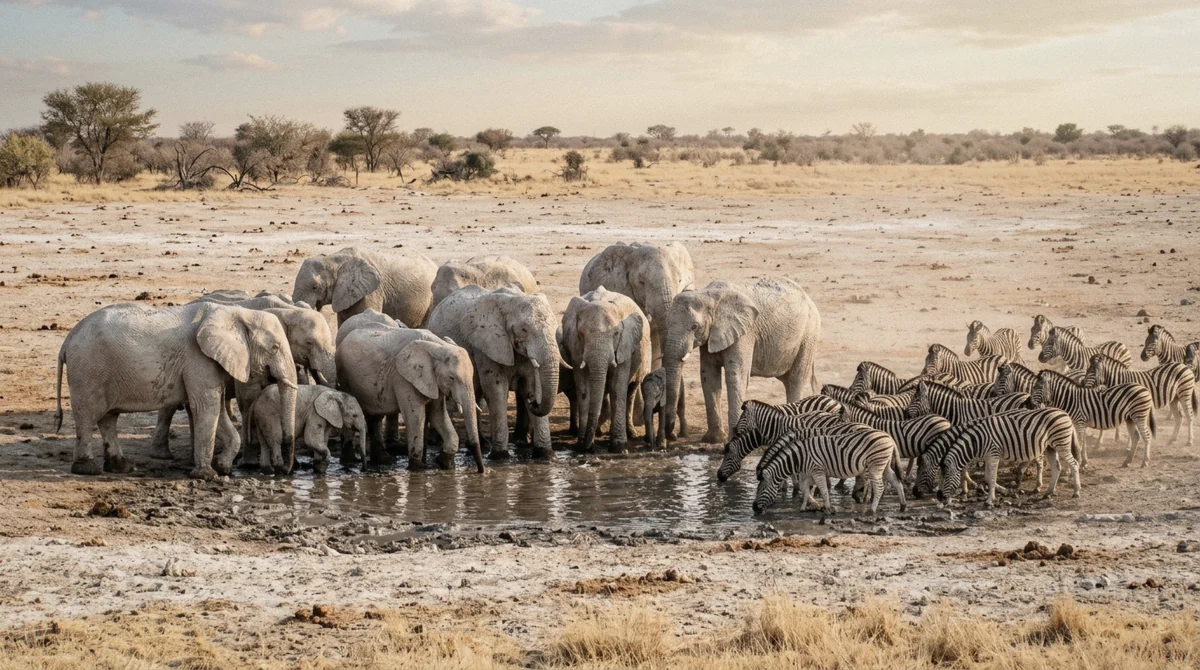
Nebrownii waterhole in September. In the dry months the game comes to the water because there is nowhere else left to drink.
Quick answer
A guided game drive inside Etosha costs $138 for either a half or a full day, leaving from Okaukuejo in an open 4x4. From Windhoek, a one-day safari runs $423 and a private three-day safari with nights at Okaukuejo runs $1,630. Park entry is separate on self-drive days: N$280 per foreign adult per day plus N$60 per vehicle since 1 April 2026. The dry season from May to September is when animals concentrate at the waterholes.
Key takeaways
- Most reviewed: the open-4x4 game drive from Okaukuejo at $138, rated 4.6 from 187 reviews, sold as either a half day or a full one
- Cheapest way in from the capital: the one-day guided safari from Windhoek at $423, which includes the drive up and the park fee
- Best value for actual sightings: three days at $1,630 with nights inside the park, because dawn and dusk are when the waterholes fill
- Four of the Big Five live here. Buffalo do not, so nobody sees the fifth
- Okaukuejo, Halali and Namutoni each have a floodlit waterhole that stays lit all night and costs nothing extra if you sleep in camp
- Free cancellation 24 hours ahead on every tour listed here
Etosha National Park Tours Compared
Four ways in, from a half-day drive booked once you are already at Okaukuejo to a private three-day safari that collects you in Windhoek. Prices are per person in USD and the ratings belong to each operator.
 from $138
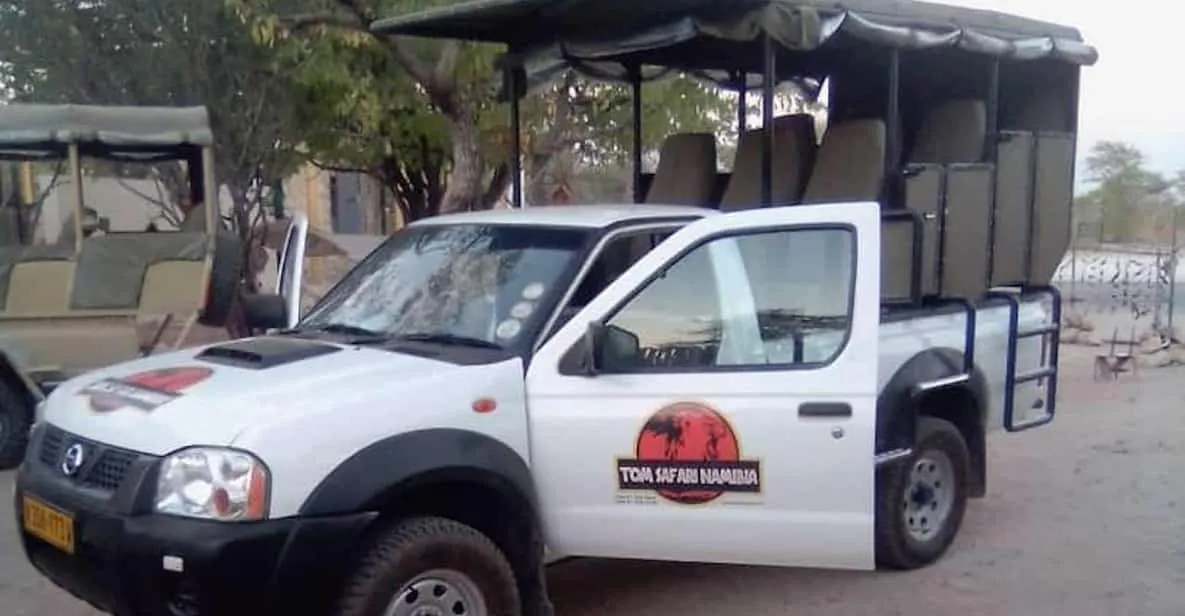
Etosha Game Drive in an Open 4x4 — Half or Full Day
An open-vehicle game drive from Okaukuejo with a professional guide. Choose the half day or stay out for the full one; waterholes are the payoff either way.
Check Availability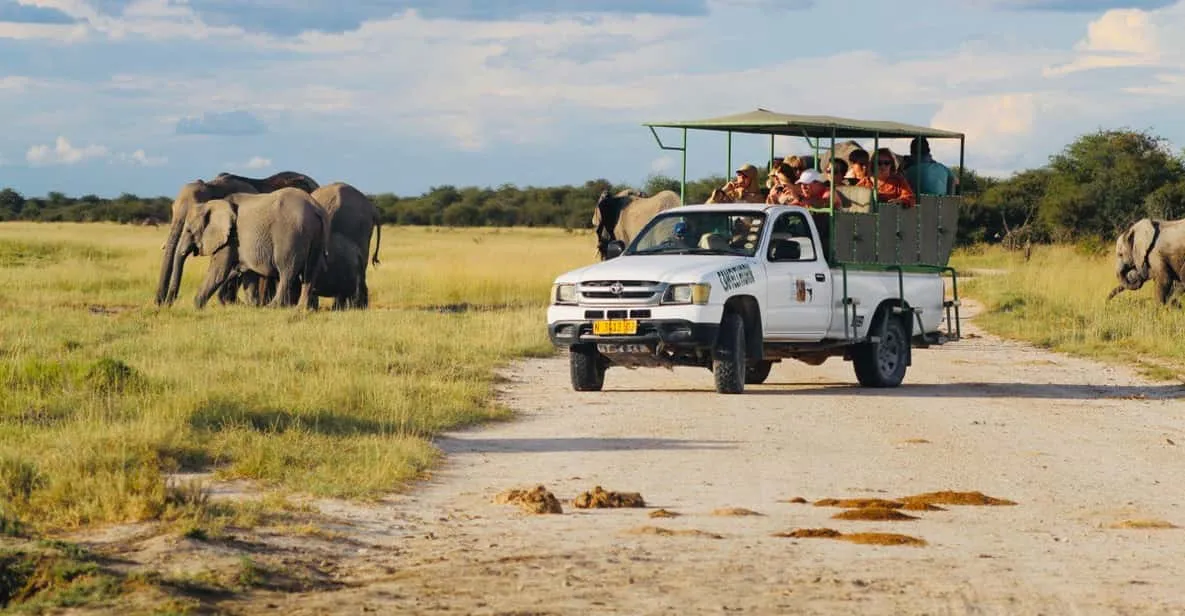 from $138
Etosha Waterhole Safari — Guided Game Drive
A classic Etosha game drive built around the waterhole circuit, where dry-season game concentrates in the open.
Check Availability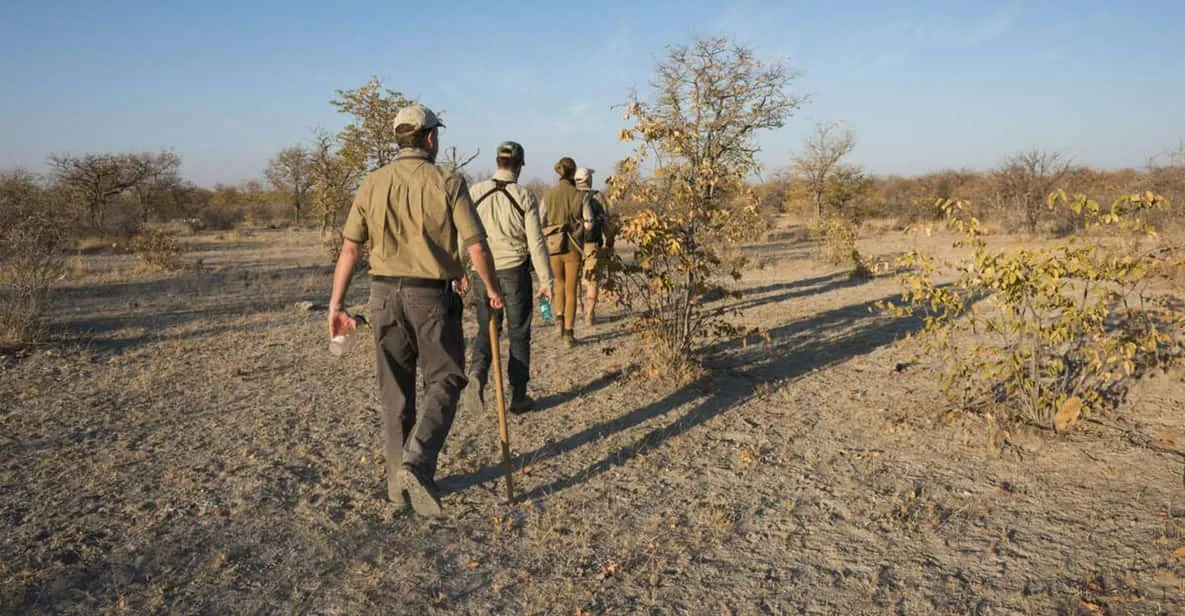 from $423
Etosha National Park Day Safari from Windhoek
The single-day option out of Windhoek for travellers who cannot give Etosha a full itinerary slot. Long drive, real game drive at the end of it.
Check Availability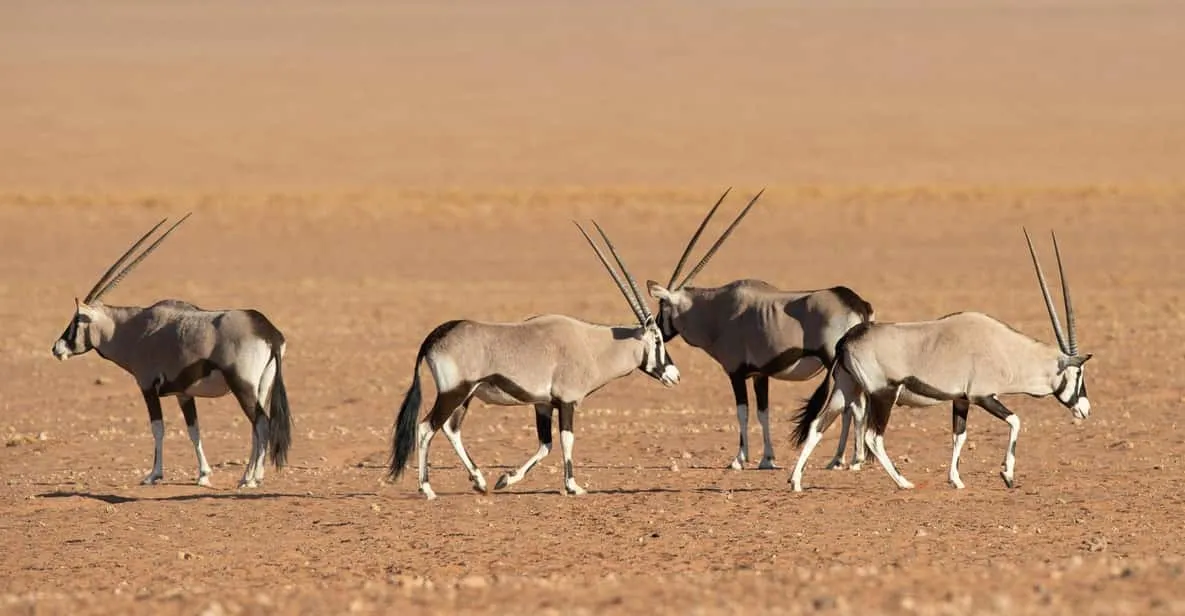 from $1630
3-Day Private Etosha Safari from Windhoek
Private guide, three days, and nights at Okaukuejo — the camp with the floodlit waterhole where black rhino come in after dark.
Check AvailabilityWhich Etosha Tour Fits Your Trip
The deciding factor is where you sleep. Everything else follows from it.
| Tour | Starts | Cost | Book | Length | Suits |
|---|---|---|---|---|---|
| Open 4x4 game drive | Okaukuejo | $138 | 5 to 10 hours | Anyone already staying in or near the park | |
| Guided waterhole safari | Okaukuejo | $138 | 5 to 10 hours | Second day in the park, different circuit | |
| One-day safari | Windhoek | $423 | 1 long day | A single free day on a fixed itinerary | |
| Private 3-day safari | Windhoek | $1,630 | 3 days | Dawn and dusk drives, nights at Okaukuejo | |
| Self-drive | Anywhere | N$280 + N$60 per day | As long as you like | Confident gravel drivers with a booked camp |
The Park, and Why the Waterholes Run Everything
What Etosha Actually Is
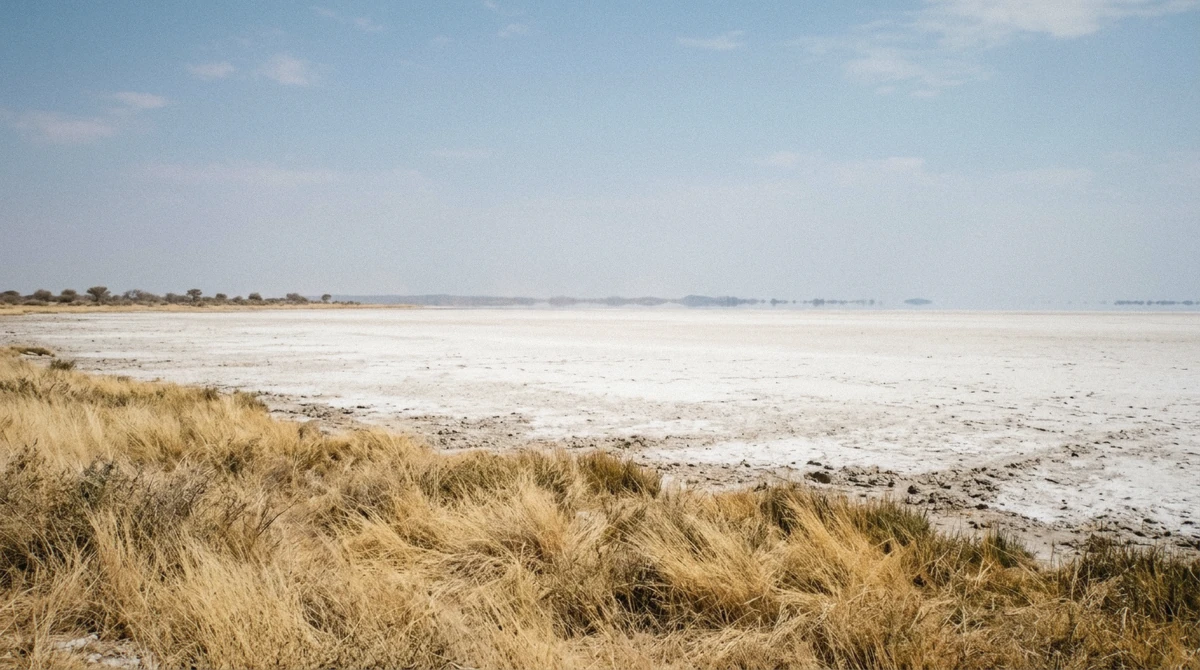
Etosha covers 22,270 km², which makes it larger than Wales and about the size of New Jersey. Roughly a quarter of that is the pan itself: 4,760 km² of cracked white clay, 130 km long and up to 50 km wide, flat enough to show a mirage at any hour and visible from orbit.
The pan holds water only after strong rain, and then briefly. Most of the year it is a dry glare that animals cross rather than use. The wildlife lives around its southern and eastern edges, where springs and pumped boreholes keep water on the surface.
Germany's colonial administration proclaimed the area a game reserve on 22 March 1907, making it one of the oldest protected areas in Africa. It became a national park in 1967, by which time its boundaries had been cut back several times. The park sits between 1,061 and 1,451 m above sea level, high enough that winter mornings bite.
Wildlife counts run to about 114 mammal species, 340 birds, 110 reptiles and 16 amphibians. The famous absence is buffalo, so Etosha has four of the Big Five and no amount of luck produces the fifth.
Why Everyone Talks About Waterholes
In parks with rivers, you look for animals. In Etosha you wait for them. Rainfall averages 418 mm a year and falls almost entirely between November and April. By July the bush has dried out, the seasonal pans have gone, and every animal in the park has to walk to one of a few dozen permanent waterholes.
That concentration is the reason Etosha reads as generous compared with denser parks. You are not hunting through thick cover. You park at the water, switch the engine off, and let the morning come to you. Elephant herds arrive in a column, zebra hesitate at the edge for ten minutes before drinking, and lion sleep in whatever shade sits within sight of it.
Guides plan a drive as a circuit of waterholes rather than a route between points. Which ones depends on recent sightings, wind and the time of day.
The Waterholes Worth Sitting At
Each of the three main camps has its own floodlit waterhole, lit through the night and free to anyone staying in that camp. These are the ones that turn up in every trip report.
| Waterhole | Where | Best for |
|---|---|---|
| Okaukuejo | Okaukuejo camp, floodlit | Black rhino after dark, elephant in numbers |
| Halali | Halali camp, floodlit | Rhino and leopard, quieter crowds than Okaukuejo |
| Moringa | Halali camp | Night sittings under the fig trees |
| Nebrownii | 10 min east of Okaukuejo | Elephant and lion mid-morning in the dry months |
| Chudop | Near Namutoni | Lion, giraffe, large mixed herds |
| Goas | South of Halali | Elephant, and the busiest water on the central plain |
| Klein Namutoni | East, by Fischer's Pan | Black-faced impala, which live nowhere else in numbers |
| Salvadora and Sueda | On the pan edge | Cheetah on open ground, best light early |
Wildlife You Can Expect to See
Etosha holds roughly 114 mammal species, and a normal three-day visit sees a good share of them. Elephant are everywhere in the dry months and the herds here run large, with bulls that look bleached because they dust themselves in the white clay of the pan. Lion are common around Okaukuejo and Nebrownii, usually asleep in the shade within sight of water.
Black rhino are the reason people sit up late at the floodlit waterholes. Etosha holds one of the largest free-ranging populations left, and Okaukuejo delivers sightings most nights in the dry season. Leopard exist and hide, as they do everywhere.
The plains game is what fills the hours between the headline sightings. Zebra in their thousands, blue wildebeest, springbok, gemsbok, eland, giraffe and kudu all come to the same water. Two species are worth learning to recognise because Etosha is where you see them: the black-faced impala, which survives almost nowhere else and concentrates around Namutoni, and the Damara dik-dik, a knee-high antelope in the thicker bush near Halali.
Birds run to about 340 species. Kori bustard walk the open plain, secretary birds hunt on foot, and after good rain the pan fills with flamingo and pelican that arrive from nowhere and vanish again when it dries.
What you will not see is buffalo. They do not occur here, so no guide can produce the fifth of the Big Five however long you stay.
The Rest Camps and Where to Base Yourself
Where you sleep sets which waterholes you can reach at dawn, and that matters more than the room.
Okaukuejo sits in the south, an hour from the Anderson gate, and is the busiest of the three. Its floodlit waterhole is the famous one, a few steps from the fence, and it produces black rhino and elephant on most dry-season nights. The camp itself is functional rather than charming and it books out first.
Halali stands in the middle of the park, quieter, with its Moringa waterhole reached by a short walk up a rise and screened from the camp lights. Regulars rate it the best chance of leopard and a calmer rhino sighting.
Namutoni in the east occupies a converted German fort from 1903 and reaches Fischer's Pan and the Chudop and Klein Namutoni waterholes. This is the corner for black-faced impala and for large mixed herds early in the day.
Dolomite in the west and Onkoshi on the pan edge are smaller and more expensive, and both sit in areas that see a fraction of the traffic. Outside the fence, lodges cluster near the Anderson gate on the C38 and cost less, at the price of an hour's drive before each morning drive begins.
The Gates and How Their Hours Work
Four gates let you in. Anderson in the south is the one most people use, an hour from Okaukuejo. Von Lindequist sits in the east near Namutoni, Galton in the west near Dolomite, and King Nehale in the north.
All four open at sunrise and close at sunset, which means the times move every week of the year. In midwinter that is roughly 07:20 to 17:50. In midsummer it stretches to about 06:15 and 19:20. Guards enforce it: being late back to camp draws a fine, and being outside the gates at dusk is not an option.
Inside the park you stay on the gravel roads. Off-road driving is banned, and so is stepping out of the vehicle except at marked camps and designated points. This is not a formality, it is what keeps the lion habituated to vehicles rather than to people.
What the Park Charges
Namibia raised its park fees on 1 April 2026, and the increase was steep. A foreign adult now pays N$280 per person per day, children aged 8 to 16 pay N$180, and under-8s go free. A vehicle of ten seats or fewer adds N$60, rising to N$150 for 11 to 25 seats.
Fees run by calendar day, not by 24 hours. A three-night stay is charged four times if you enter on the first afternoon and leave on the fourth morning. Guided tours normally fold this into the price, but read the listing before you assume it.
- Foreign adult, 16 and over: N$280 per day
- Child aged 8 to 16: N$180 per day
- Under 8: free
- Vehicle up to 10 seats: N$60 per day
- Pay at the gate on arrival, card accepted at the main gates
Etosha Month by Month
Bars show the average daytime high, the number under each is the overnight low. Colour marks the season, and the season is what decides whether the game is at the water or spread thin across green bush.
- 33°C day Jan 19°C
- 31°C day Feb 19°C
- 31°C day Mar 18°C
- 30°C day Apr 15°C
- 28°C day May 11°C
- 25°C day Jun 8°C
- 25°C day Jul 7°C
- 28°C day Aug 9°C
- 32°C day Sep 13°C
- 34°C day Oct 17°C
- 34°C day Nov 18°C
- 33°C day Dec 19°C
- Dry season, game at the waterholes (May to September)
- Shoulder, hot and building to rain (October, April)
- Green season, dispersed game and newborns (November to March)
Rainfall averages 418 mm a year and nearly all of it lands between November and April. Early dry-season mornings drop to about 7°C in an open vehicle at 60 km/h, which feels considerably colder than the number.
Planning the Trip
How Many Days Etosha Needs
Two nights is the honest minimum. That gives you an afternoon drive on arrival, two full mornings, and two evenings at a floodlit waterhole. One night is a rushed version of the same thing and still beats a day trip.
Three to four nights lets you move camps and see different country. Okaukuejo covers the western and central waterholes, Halali sits in the middle with the best rhino odds after dark, and Namutoni in the east reaches Fischer's Pan and the black-faced impala.
A single day from Windhoek is a compromise, not a safari. The capital lies about 400 km south of the Anderson gate, so the day runs to twelve or thirteen hours with maybe four of them inside the park. People book it because it is the only slot they have, and they do see game. They also spend most of the day on tar.
Etosha Compared With Kruger
The question comes up constantly, and the answer depends on what you want a park to do.
Kruger is bigger, wetter and denser. It has buffalo, so it has all five, and it has rivers, which spreads the game across the landscape year-round. It also has far more people, more tar roads and a much larger bed base.
Etosha is drier, flatter and easier to read. Because the animals must come to a handful of waterholes in the dry months, sightings cluster in a way Kruger rarely matches, and you spend less time driving between them. The open pan also makes for long sight lines: you can watch a herd approach for twenty minutes. Etosha has no buffalo and lower leopard densities. It compensates with black rhino, which are easier to see here after dark than almost anywhere in Africa.
Malaria and What to Take
Etosha sits at the southern edge of the malaria zone. The risk is real from November to June, when the rain comes and mosquitoes breed, and it is low from July to October. Namibia's northern regions, including the districts around the park, are listed as areas of seasonal falciparum transmission.
Most travel clinics recommend prophylaxis for a wet-season trip and treat a dry-season one as a discussion rather than a rule. Ask a travel doctor rather than a tour operator, because the answer depends on your route and your own health.
Whatever you decide, cover up at dusk and use repellent. That advice holds regardless of season and costs nothing.
- November to June: higher risk, prophylaxis usually advised
- July to October: low risk, discuss with a travel clinic
- Long sleeves and repellent from late afternoon onward
- Camps and lodges inside the park spray and screen rooms
- Yellow fever certificate only if you arrive from an endemic country
Getting to Etosha
From Windhoek the drive to the Anderson gate takes about five hours, roughly 400 km, and most of it is good tar to Otjiwarongo and then Outjo. The eastern Von Lindequist gate is a similar distance through Tsumeb.
From Swakopmund on the coast, count on seven hours or a night in Otjiwarongo. That gap is why coastal tours and Etosha safaris rarely combine into one week without a lot of driving.
Ondangwa and Windhoek both have airports with connections, and several operators run fly-in packages that skip the road entirely at a considerable price.
What to Wear and Carry
Game-drive dress is unglamorous and practical. Open vehicles at dawn are cold, and the same vehicle at noon has no shade.
- Layers: fleece and windproof for the first hour, shirt sleeves by nine
- Neutral colours. Bright white and black both stand out at a waterhole
- A wide-brimmed hat and sunglasses, because the pan glare is brutal
- Binoculars, one pair per person rather than one to share
- A beanbag or rolled jacket to steady a long lens on the window sill
- Two litres of water per person per drive, more in October
- Cash in Namibian dollars for gate fees on self-drive days
Where the Park Sits
Etosha lies in northern Namibia, about 400 km from Windhoek. Okaukuejo, the busiest camp, sits inside the southern boundary an hour from the Anderson gate.
From Recent Game Drives
The trip was well organised and the guide well educated. We could see many animals like rhino, lions, zebras, gnus, elephants and all different kinds of antelope. All in all the 5h trip is an absolute recommendation.
It was an amazing experience. We didn't get to see a prey being taken down but we got to see 6 lions. It's rare to spot 6 lions at the same place, planning their hunt. We saw giraffes, elephants and ostriches too.
The booking, planning and pick up was super easy. We were happy with our guide Amon as he gave us information about the animals and the park along the way.
Etosha Questions People Ask
How many days do you need in Etosha National Park?
Two nights is the working minimum: an arrival drive, two mornings and two evenings at a floodlit waterhole. Three or four nights lets you move between Okaukuejo, Halali and Namutoni and see genuinely different country. A single day from Windhoek works only if it is the only slot you have, since the drive alone eats eight hours.
What is better, Kruger or Etosha?
Kruger has buffalo, rivers and higher overall game density, so it holds all of the Big Five and spreads sightings across the year. Etosha concentrates game at a few waterholes through the dry season, which makes sightings easier to plan and less driving-heavy, and it is one of the better places in Africa to see black rhino after dark. Etosha is quieter. Kruger is denser.
What is the best time to visit Etosha?
July to October, with September usually the strongest month. The bush has thinned, the seasonal water has gone, and everything walks to the permanent waterholes. May and June are cooler and still excellent. The green season from November to April brings newborn antelope and migrant birds but disperses the game.
Do I need malaria tablets for Etosha National Park?
The park sits at the edge of a seasonal malaria zone. Risk rises from November to June and drops from July to October. Most travel clinics recommend prophylaxis for a wet-season trip and treat the dry season as a personal decision. Ask a travel doctor about your specific route, and use repellent and long sleeves from dusk regardless.
How big is Etosha National Park?
22,270 km², of which the Etosha Pan itself covers 4,760 km². The pan is about 130 km long and up to 50 km wide, which is why it shows on satellite images as a white smear across northern Namibia.
Can you self-drive in Etosha?
Yes, on the gravel road network, in any vehicle with reasonable clearance. Off-road driving is banned and so is getting out of the car outside marked camps. You pay N$280 per foreign adult per day plus N$60 for the vehicle, and you must be back inside a camp by sunset.
What are the Big Five in Etosha?
Lion, leopard, elephant and black rhino. Buffalo do not occur in the park, so four of the five is the ceiling. Black rhino are the local speciality and turn up at the floodlit waterholes at Okaukuejo and Halali most nights in the dry season.
What is the floodlit waterhole at Okaukuejo?
A waterhole a few steps from the camp fence, lit through the night and free to anyone staying in the camp. You sit on a low wall in the dark and wait. Rhino, elephant and lion all come in, often after ten at night, and the etiquette is complete silence.
How does the game drive differ from self-driving?
Height and radio. A guided open 4x4 sits higher than a rental car and its guide is on a network with every other vehicle in the area, which is how a lion sighting spreads within minutes. You also get someone who knows which waterhole produced what yesterday.
When can you see flamingos at Etosha?
Only after strong rain, usually February to April, when water stands on the pan long enough for lesser and greater flamingo to arrive and occasionally breed. In most years the pan is dry and the flamingos you photograph in Namibia are the ones at Walvis Bay.
What time should I be at the waterhole?
First light and the last hour before the gates close. Game drinks at the edges of the day, and the middle of the morning empties out fast once the temperature climbs. Guides plan around that, which is why a half-day drive starts before sunrise rather than after breakfast.
Can I do Etosha without a guide?
Yes, and plenty do. A self-drive works if you have a booked camp inside the park, a vehicle with clearance, and the discipline to be back before sunset. What you give up is height, a radio network that spreads every lion sighting within minutes, and someone who knows which waterhole produced what yesterday.
Is Etosha safe?
Yes, within the rules. Stay in the vehicle, keep windows up near predators, do not drive after gate closing, and watch the road for animals rather than for other cars. The camps are fenced and the roads are well maintained gravel.
Can I combine Etosha with the Namib Desert?
In eight days or more. Etosha sits about 500 km north of the dune fields, so a trip that takes in both wants two long transfer days. Many travellers pair Sossusvlei and the coast first, then fly or drive north.
Do the camps have fuel and shops?
Okaukuejo, Halali and Namutoni each have a fuel pump, a small shop with basics and a restaurant. Prices inside the park run higher than in Outjo or Tsumeb, and the shops stock less than you would hope, so buy drinks, snacks and anything you actually need before you pass the gate.
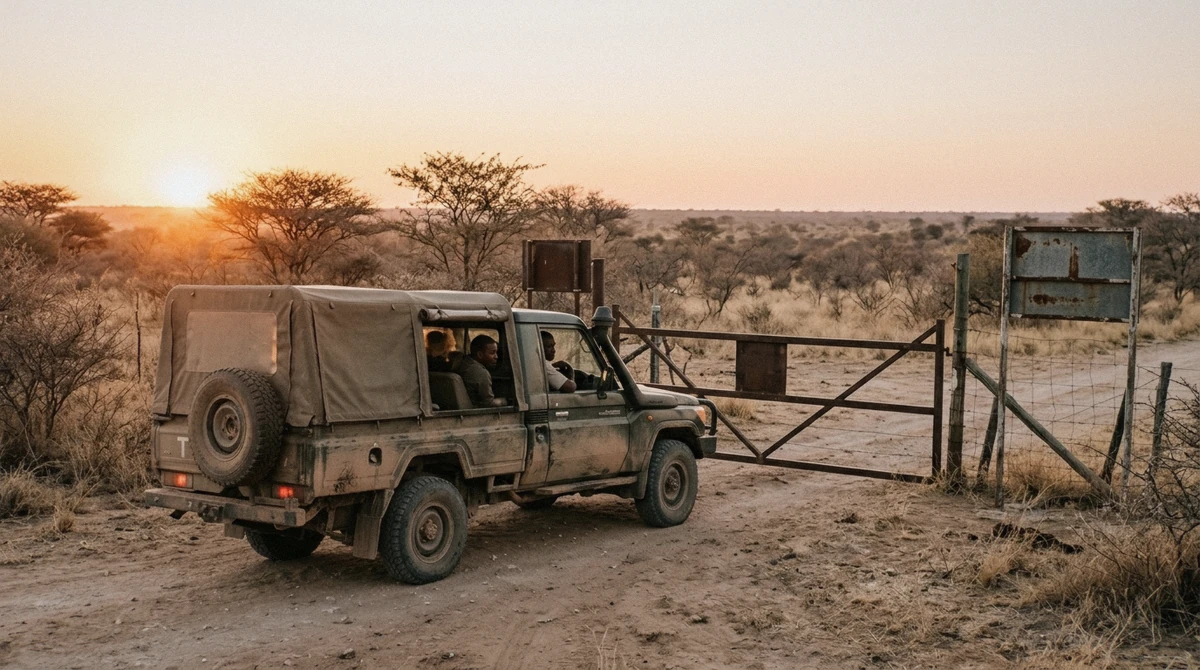
First light at the gate
Gate Times and Permits for 2026
Game drives from Okaukuejo time their loops around the gate: it opens at sunrise and the waterholes are busiest in the first two hours, so the half-day morning drive remains the best value per animal seen. Park fees, N$280 per foreign adult per day plus N$60 per vehicle since April 2026, are separate from the tour price on self-drive days and included on guided runs. For how the seasons move the animals, the best time to visit the Namib Desert guide has the month-by-month detail.