Sandwich Harbour 4x4 Tours: The Tide Decides Your Morning

Sandwich harbour 4x4 tours run 42 km south of Walvis Bay to a lagoon where dunes of about 100 m stand at the waterline. The beach between them and the surf is the only route in, and it opens for a few hours around low tide. That single fact sets the departure time, the price, and whether a given day ends at the lagoon or at a viewpoint above it. It is the shortest of the guided tours across the Namib and the easiest to fit into a coastal day.
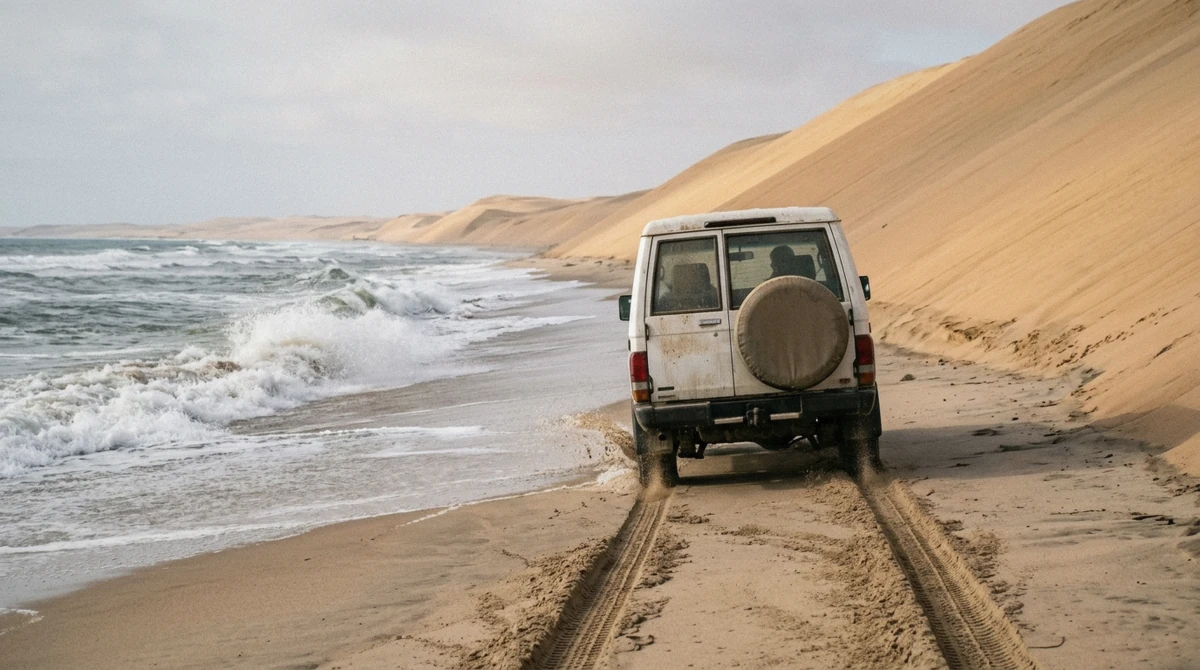
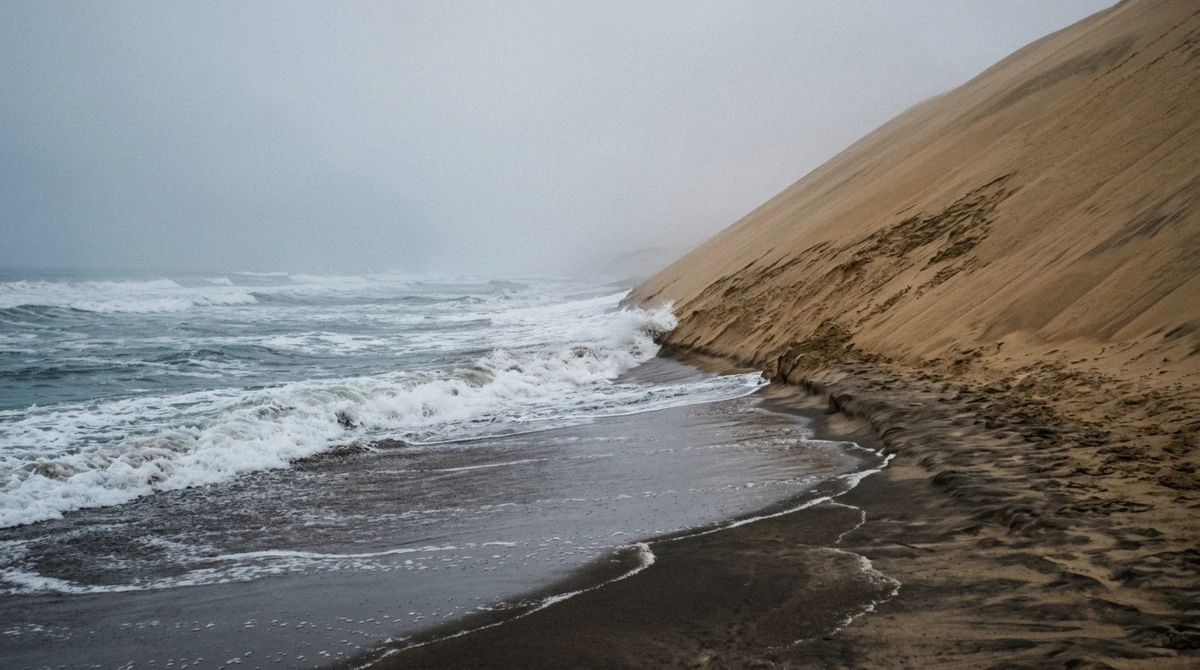
The beach section south of the Kuiseb delta. Two hours later this strip is under water and the vehicles are back on the dunes.
Quick answer
A Sandwich Harbour 4x4 half-day costs $127 to $167 and runs 3.5 to 5 hours from Walvis Bay, with pickup in Swakopmund on most operators. The full day with kayaking at Pelican Point costs $246. Departure times move with the tide rather than the clock, and the area sits inside the Namib-Naukluft Park, so you need a permit and in practice a licensed guide. Local operators quote around N$3,095 per adult for the same half day if you book direct.
Key takeaways
- Top rated: the Half-Day 4x4 Scenic Excursion at $127, 4.96 from 524 reviews, with oysters and sparkling wine on the dune crest
- Most booked from Swakopmund: the 4.5-hour Walvis Bay and Sandwich Harbour tour at $140, 4.81 from 806 reviews
- Full day at $246: kayaking with Cape fur seals at Pelican Point in the morning, dunes in the afternoon
- Sunset runs from $150: the same route with the light on the dune faces instead of overhead
- You cannot self-drive it. The route is permit-controlled and the beach window is tidal
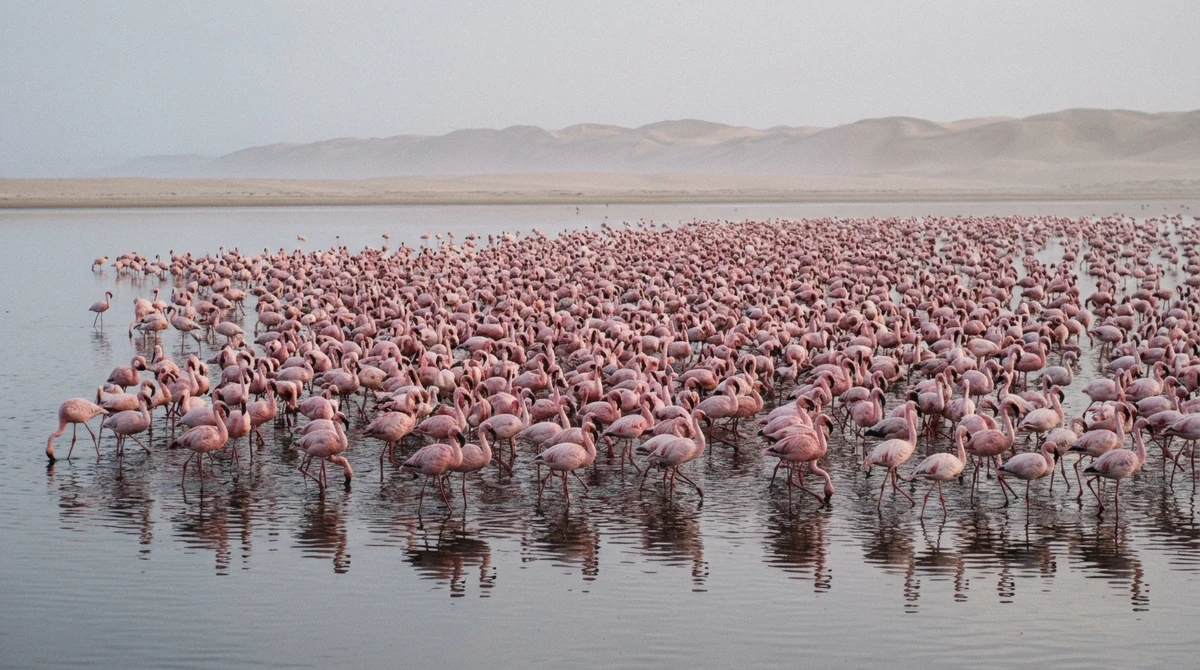
- Walvis Bay Lagoon on the way holds over 150,000 birds and up to 50,000 flamingos
Sandwich Harbour 4x4 Tours
Eight runs from the same two towns. What separates them is length, pickup point, and whether you get the midday light or the evening one.
 from $127
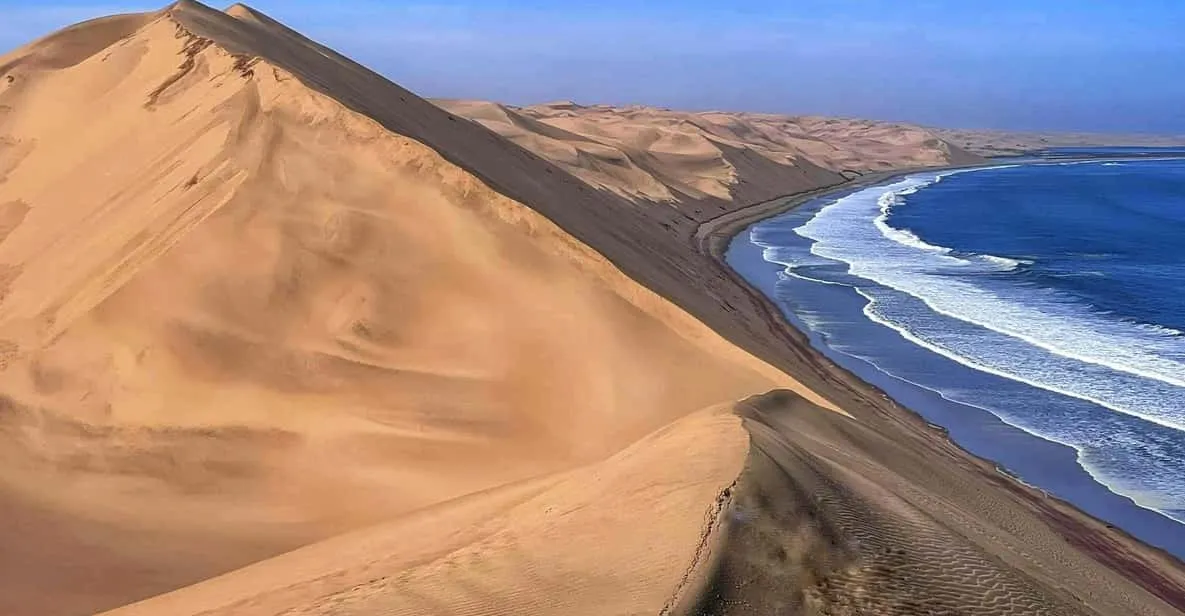
Sandwich Harbour Half-Day 4x4 Scenic Excursion
The highest-rated way to reach the harbour: lagoon and salt pans first, then the beach run and a climb onto dunes that fall straight into the Atlantic. Oysters and sparkling wine on the crest.
Check Availability from $140
Walvis Bay and Sandwich Harbour 4x4 Tour
The most-booked Sandwich Harbour run on the coast, picking up in Swakopmund. Flamingos at the lagoon, the pink salt works, then dune driving down to the harbour.
Check Availability from $138
Sandwich Harbour Half-Day 4x4 from Walvis Bay
A compact half day from Walvis Bay: the lagoon, the salt works, and the Namib-Naukluft dune belt where the sand meets the sea.
Check Availability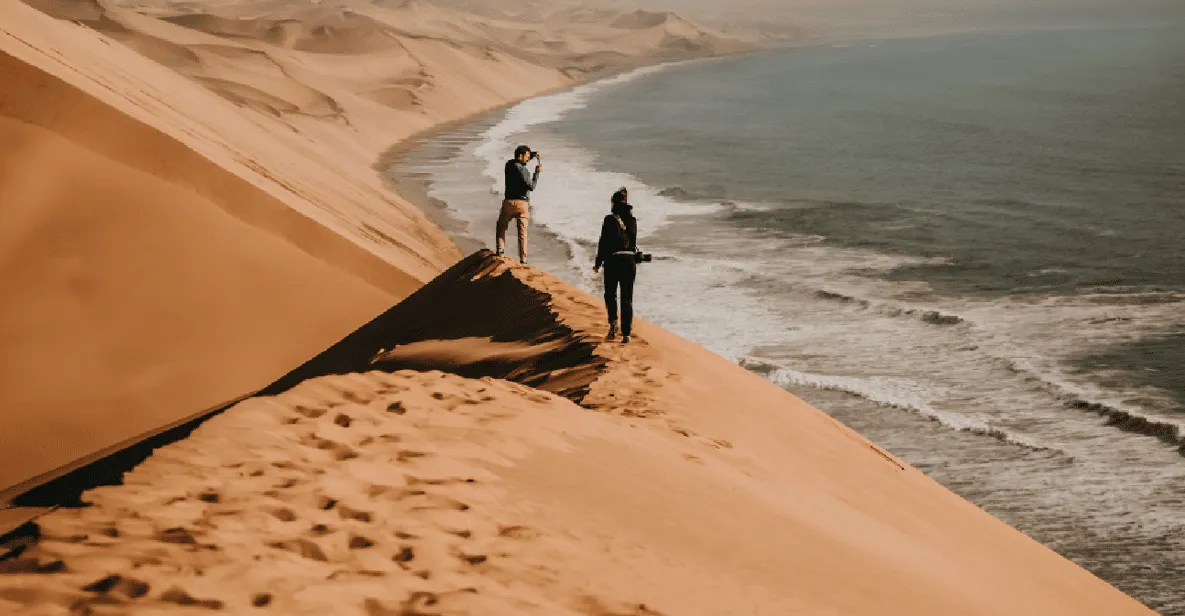 from $151
Sandwich Harbour 4x4 Guided Tour with Wildlife Stops
A longer, slower version with time for the desert-adapted wildlife and plant life along the Kuiseb Delta before the dunes.
Check Availability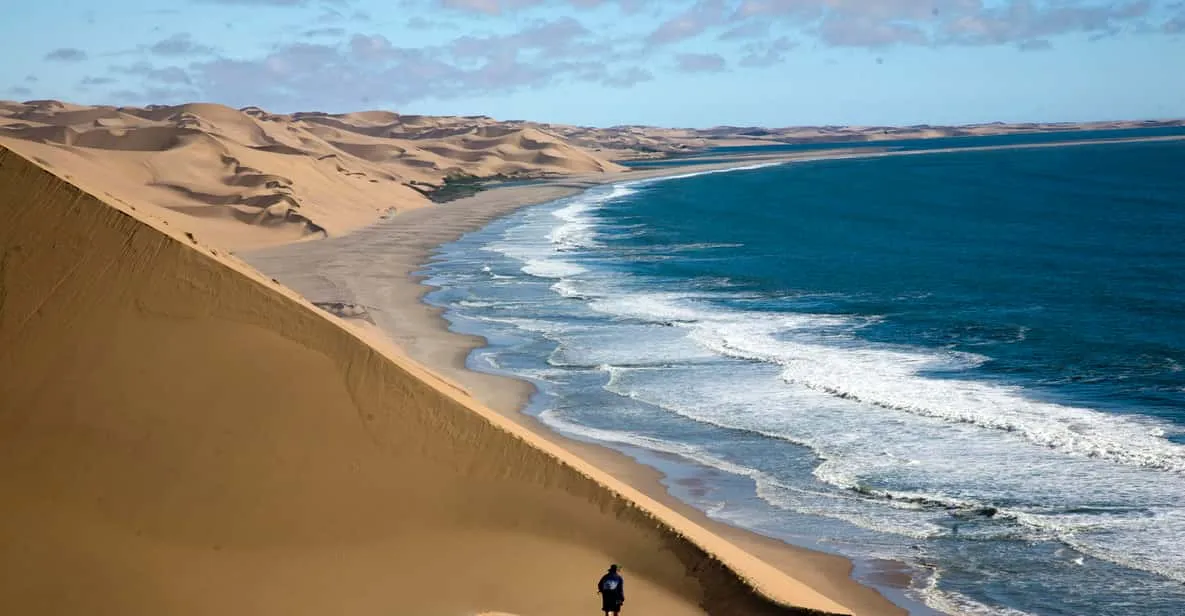 from $138
Afternoon 4x4 to Sandwich Harbour with Oysters
The afternoon departure, timed to the tide. Kuiseb Delta wetlands, pink lakes and flamingos, dune driving, then fresh Namibian oysters with Prosecco above the ocean.
Check Availability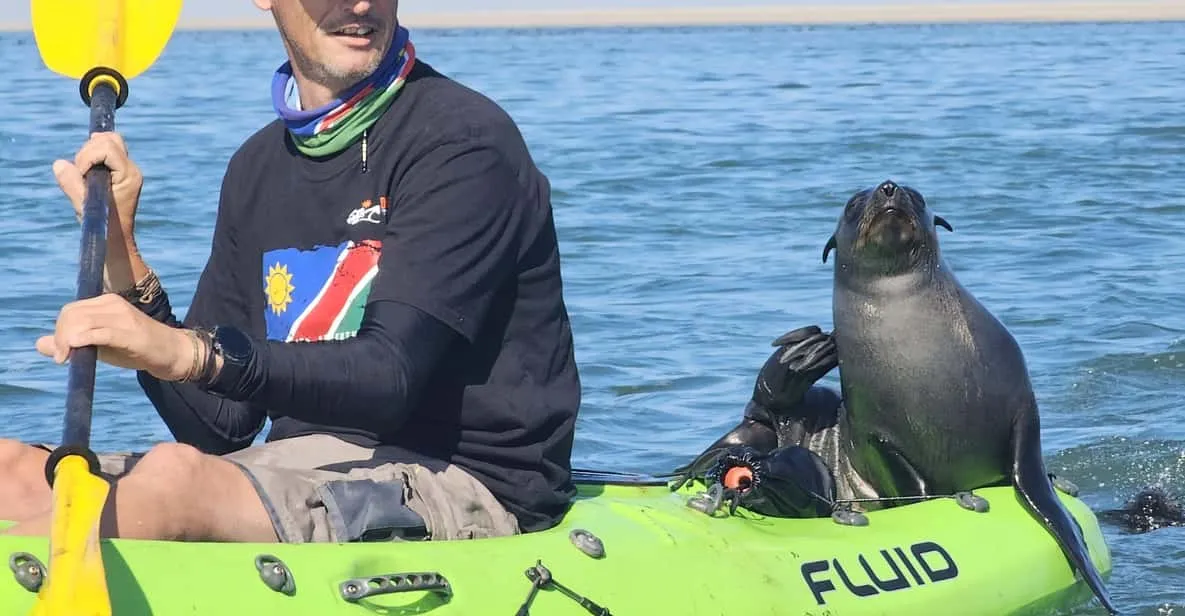 from $246
Kayaking with Seals and Sandwich Harbour Full-Day
Morning paddle among Cape fur seals at Pelican Point, brunch, then the 4x4 dune drive south to Sandwich Harbour. The one day that covers both sides of this coast.
Check Availability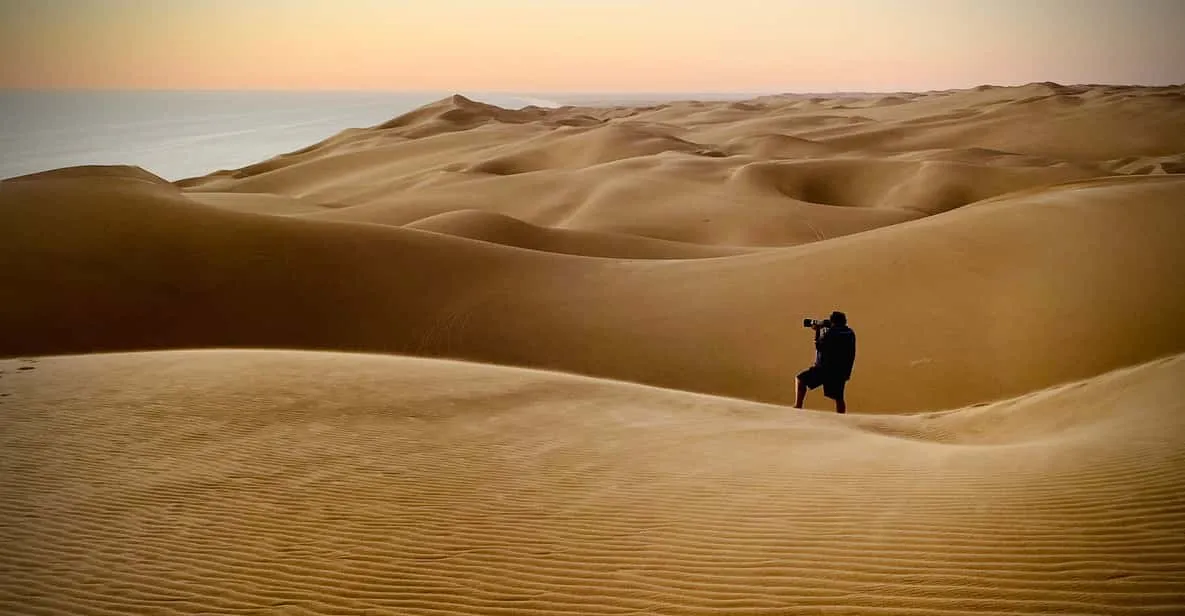 from $150
Sandwich Harbour Sunset Photography Tour
Built for photographers: late light, long shadows down the dune faces and the sun dropping into the Atlantic behind the sand sea.
Check Availability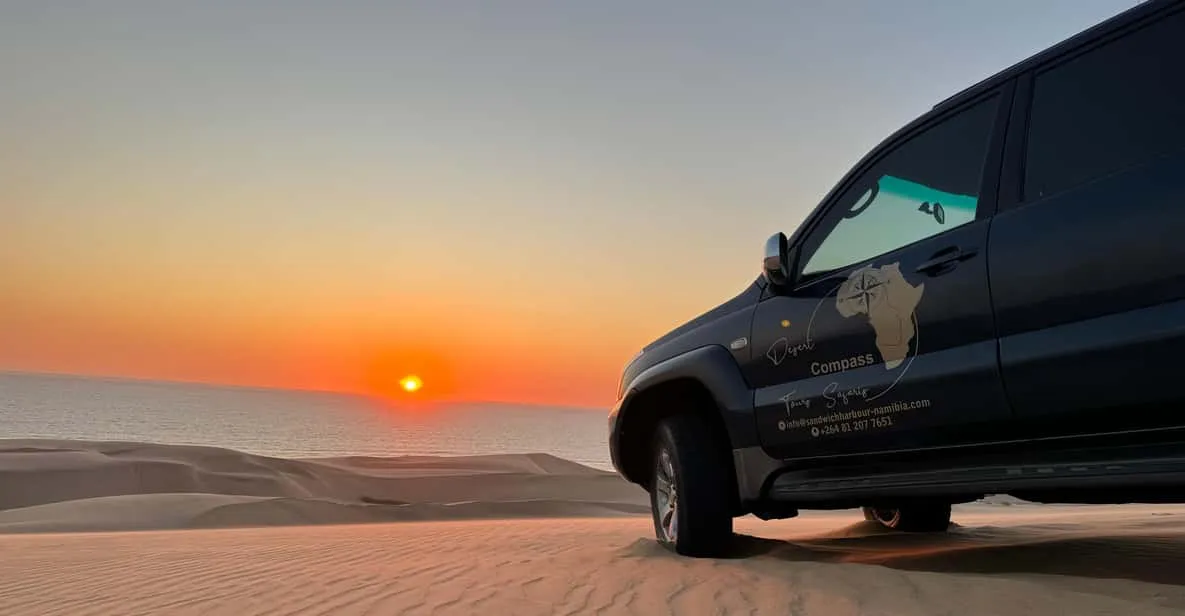 from $167
Sandwich Harbour Sunset Dune Drive
The late run down to the harbour and back over the dunes as the light goes gold. Small groups, unhurried stops.
Check AvailabilityHalf Day, Full Day or Sunset
Every listing below covers the same 42 km. The differences are time on the dunes, what is included, and where you are collected.
| Tour | Pickup | Cost | Book | Hours | What it adds |
|---|---|---|---|---|---|
| Half-day scenic excursion | Walvis Bay | $127 | 4 | Highest rated on the coast, oysters on the crest | |
| Walvis Bay and Sandwich Harbour | Swakopmund | $140 | 4.5 | Most reviewed, lagoon and salt works first | |
| Half-day 4x4 | Walvis Bay | $138 | 4 | Lagoon, salt works, Namib-Naukluft dune belt | |
| Guided 4x4 with wildlife stops | Swakopmund | $151 | 5 | Slower, with time in the Kuiseb delta | |
| Afternoon 4x4 with oysters | Walvis Bay | $138 | 4 | Pink lakes, flamingos, oysters and Prosecco | |
| Kayaking and Sandwich Harbour | Swakopmund | $246 | 8 | Cape fur seals by kayak, then the dunes | |
| Sunset photography tour | Walvis Bay | $150 | 3.5 | Late light on the dune faces | |
| Sunset dune drive | Walvis Bay | $167 | 4 | Sundowner on the crest, small groups |
What the Trip Involves
Why the Tide Sets the Timetable
There is no road to Sandwich Harbour. South of the Kuiseb delta the dunes reach the ocean, and the only flat ground is the beach between the dune feet and the surf. At high water that beach is gone.
Guides work from tide tables published days ahead. Low water moves by roughly 50 minutes each day, so a tour that leaves at 08:30 this week leaves at 10:00 the next, and the operator confirms the hour a day or two before. Book a flight or a cruise excursion around this at your own risk.
There is a second reason the beach is treacherous. Seawater collects under sand that looks dry, and a vehicle that stops on it settles. Recovery is a winch and another 4x4, not a shove. Guides drive that stretch fast and without stopping, and they will tell you to stay seated while they do it.
Why You Cannot Drive It Yourself
The whole area lies inside the Namib-Naukluft Park, and entry needs a permit issued by the ministry office in Swakopmund or at Sesriem. In practice, access to the beach and the dune belt beyond it is restricted to licensed operators with the vehicles and radios to work it safely.
The rule exists because the failure modes here are serious. A stranded vehicle on a rising tide is a write-off, and the dune faces above the beach are steep enough that a wrong line rolls a car. Every guide on this page drives the route several times a week.
If you want a self-drive desert day near the coast, the Welwitschia Drive and the Moon Landscape east of Swakopmund are open to any vehicle and need only a permit.
The Route, Stop by Stop
Most operators run the same sequence, because the geography leaves little choice.
- Walvis Bay Lagoon: flamingos in the shallows, pelicans on the posts, and the best birding on the Namibian coast
- The salt works: evaporation pans turning pink from the algae that colour the flamingos as well
- Kuiseb River delta: the last freshwater before the sand sea, with nara melons rooted metres deep
- The dune belt: the first climbs, and where tyre pressures come down
- The beach run: the tidal section, driven briskly and without stops
- Sandwich Harbour lagoon: the turnaround, with a viewpoint high on the dunes if the water is up
- Refreshments on a crest: oysters and sparkling wine on most half-day runs, a full picnic on the longer ones
The Birds at Walvis Bay
The lagoon you pass on the way is not a warm-up act. Walvis Bay is Ramsar site 742, listed on 23 August 1995, and it holds more than 150,000 birds at a time, with a further 200,000 shorebirds and terns passing through on migration between here and the Arctic.
Flamingo numbers peak near 50,000. Around 90% of southern Africa's flamingos winter here, and roughly 70% of the world's chestnut-banded plovers depend on this one stretch of shallow water. Add pelicans, avocets, black-winged stilts and Damara terns, and the drive-past turns into the reason some people book the tour at all.
Sandwich Harbour itself is a separate Ramsar site and holds its own crowds, fed by the groundwater that seeps out at the foot of the dunes and keeps the northern part of the lagoon fresh.
The Wildlife in the Sand
Between the lagoon and the harbour the guides stop for the small things, which is the part most people do not expect to enjoy.
Oryx and springbok work the dune valleys, and black-backed jackal patrol the tideline for whatever the sea leaves. Brown hyena pass through at night and leave tracks. The dune surface itself holds a whole community: Peringuey's adder, which swims under the sand and leaves a looped sidewinder track, the web-footed gecko that licks fog off its own eyes, the dancing white lady spider that cartwheels down a slipface to escape, and golden moles that never come up at all.
Nara plants anchor the dune belt and feed most of it. Their roots reach 40 m or more for water, and their melons have fed the Topnaar community here for centuries.
Why the Place Is Called a Harbour
A harbour operated near here in the 15th century, most likely as a whaling station, and later a fishing and guano operation worked the lagoon. Nothing of any of it survives. Sand and sea have taken the buildings and the shoreline has moved.
The name stuck anyway, and the argument about where it came from continues. One theory credits an English whaler called the Sandwich. Another points to the German Sandfisch, a shark species once caught here. There is no document that settles it, which is the sort of detail your guide will bring up on the drive back.
What You See on the Way
The species that turn up on a normal half-day run, and where along the route each one appears.
-
Lesser flamingo
Phoeniconaias minor Walvis Bay LagoonUp to 50,000 birds at peak, feeding head-down in the shallows -
Great white pelican
Pelecanus onocrotalus Lagoon and salt worksRoosting on the posts, and following the fishing boats -
Cape fur seal
Arctocephalus pusillus Pelican PointSeen close on the full-day kayak run, heard from a kilometre off -
Black-backed jackal
Lupulella mesomelas Beach and dune feetWorking the tideline, unbothered by vehicles -
Oryx
Oryx gazella Dune valleys and gravelStanding out on bare sand where nothing else can -
Peringuey's adder
Bitis peringueyi Dune slipfacesBuried with only the eyes showing, leaving looped tracks -
Web-footed gecko
Pachydactylus rangei Dune belt after darkTranslucent, and drinks by licking fog off its eyes -
Nara melon
Acanthosicyos horridus Kuiseb delta hummocksRoots down 40 m or more, and has fed the Topnaar for centuries
Fog reaches this coast on most nights and up to 100 km inland. Almost everything in the list above drinks it rather than waiting for rain.
Booking, Prices and What to Bring
Morning or Afternoon
Both leave on the same tide logic, so the choice is about light and temperature rather than access.
Morning runs are cooler, the lagoon birds are active, and the fog often lifts as you head south. The dune light is flatter at midday when you reach the harbour.
Afternoon and sunset runs give you the good light on the dune faces and the sun going down over the Atlantic from a crest, which is the photograph people come back with. They are warmer, and the birds at the lagoon are less lively on the way out. If you only do one, take the afternoon in winter and the morning in high summer.
What It Costs, and Where the Numbers Differ
Booked through a platform in USD, a half day runs $127 to $167 and the full day with kayaking runs $246. Booked direct with a local operator in Namibian dollars, the same half day is quoted around N$3,095 per adult, with children aged 4 to 12 near N$2,195.
The two numbers land in a similar place once you convert, and the platform price carries free cancellation 24 hours ahead, which the direct booking often does not. Check what the listing includes before comparing: park permit, refreshments and hotel pickup are standard on the tours here, and lunch is not always.
- Half day, 3.5 to 5 hours: $127 to $167
- Full day with kayaking: $246
- Direct local rate, half day: about N$3,095 adult, N$2,195 child 4 to 12
- Included on most runs: guide, 4x4, park permit, oysters and sparkling wine
- Not included: lunch on the shorter runs, and gratuities
What to Wear
The coast here is cold, and people who packed for a desert get caught out. The Benguela current keeps Walvis Bay grey and windy while Sossusvlei bakes 350 km inland.
- A windproof jacket, even in January
- Closed shoes you can empty, or sandals you accept will fill
- Sunglasses and sun cream. The glare comes off the water and the sand at once
- A dust-tight bag for a camera, and the discipline not to change lenses outside
- Motion sickness tablets if dune driving worries you, taken an hour ahead
- Cash for tips, since card machines do not work on a dune
Who Should Skip It
The dune driving is a rollercoaster by design. Vehicles crest ridges and drop down slipfaces, and the guides play to it.
That rules the trip out for anyone with a back or neck injury, and it makes it a poor choice in late pregnancy. Children from about four travel on most operators at a reduced rate, and they usually enjoy it more than their parents.
If the tide is high, the trip becomes a dune tour with a lagoon viewpoint rather than a beach drive. Operators are upfront about this on the day, and most will offer a different date instead.
Where Sandwich Harbour Is
42 km south of Walvis Bay inside the Namib-Naukluft Park, reached along the beach and over the dune belt.
Recent Reviews
We had an excellent tour with this team. Everything ran seamlessly and the gentlemen were wonderful, they were friendly and helpful and provided lots of information on the geography and wildlife of the area.
An amazing tour up and down the Sandwich Bay dunes and the salt pans, wonderful landscapes and lots of fun with our guide, completed by an excellent lunch break on the beach. A must-do.
Fantastic afternoon, mixing the most incredible scenery with a fun but also interesting dune ride. Excellent apéro with a view to die for, most memorable sunset, and a super nice and knowledgeable guide.
Sandwich Harbour Questions
How much does a Sandwich Harbour dune tour cost?
A half day runs $127 to $167 and the full day with kayaking at Pelican Point runs $246. Booked direct with a local operator the half day is about N$3,095 per adult and N$2,195 for a child aged 4 to 12. The park permit and refreshments are included on the tours listed here.
Is Sandwich Harbour better in the morning or afternoon?
Afternoon for photographs, morning for birds and cooler air. The dune faces catch the good light late in the day and the sunset from a crest over the Atlantic is what most people book for. Morning runs are calmer, and the lagoon is busier with flamingos and pelicans on the way out.
Why is Sandwich Harbour famous?
Because dunes of about 100 m meet the Atlantic here with nothing in between, and the only way along that line is a beach that exists for a few hours a day. A 15th-century whaling harbour once worked the lagoon, and the site is now a Ramsar wetland with one of the densest bird populations on the southern African coast.
How do you visit Sandwich Harbour?
On a guided 4x4 tour from Walvis Bay or Swakopmund. The route is inside the Namib-Naukluft Park and needs a permit, and the beach section is only passable around low tide. Half-day runs leave twice daily on times that shift with the tide.
Can you do Sandwich Harbour self-drive?
Not the beach and dune route. It is permit-controlled and access is restricted to licensed operators, for the good reason that a vehicle stuck on a rising tide is unrecoverable. For self-drive desert near Swakopmund, take the Welwitschia Drive and the Moon Landscape instead.
How far is Sandwich Harbour from Walvis Bay?
42 km south. It takes about an hour each way once you leave the tar, because the last stretch is beach and dune rather than road.
What happens if the tide is too high?
The tour becomes a dune drive with a viewpoint over the lagoon from high on the sand instead of a beach run to the water. Guides know a day ahead and will say so. Most offer a change of date rather than a refund.
Is the dune driving safe?
The vehicles are modified Land Cruisers, the guides drive the route several times a week, and tyre pressures come down before the first climb. It feels dramatic and it is controlled. Anyone with a back or neck problem should skip it.
Can children go?
Most operators take children from about age 4 at a reduced rate. The dune sections are the part they remember. Bring more water and a hat than you think a small person needs.
Do the tours include lunch?
Half-day runs include oysters and sparkling wine on the dune crest, plus snacks. Lunch comes with the full-day and combination tours. The card for each tour on this page states what is included.
Which is better, Sandwich Harbour or Sossusvlei?
They answer different questions. Sandwich Harbour is a half-day from the coast where sand meets ocean. Sossusvlei is a 350 km drive inland to the tallest dunes and Deadvlei, and it needs a full day at minimum. Trips with five days or more take both.
What is the best month to go?
Any of them. The coast stays mild year-round because of the Benguela current, with the fog burning off by late morning most days. May to October gives the clearest afternoons, and December through February brings warmer air and more visitors.
Where the dunes meet the surf
Reading the Tide Table Before You Book
Every departure time on this page moves with the ocean. Operators run the beach in the hours around low tide, so a tour listed at 8:00 in July can sit at 11:00 by September, and the calendar you check today is the honest one. High tide days narrow the window to a couple of hours and push trips toward the viewpoint-only version.
If the timing looks tight for your trip, the full cost breakdown shows which add-ons are worth it and which are padding.