What Injections Do I Need for Namibia?

Hepatitis A and typhoid are the two vaccines CDC and the UK TravelHealthPro both recommend for Namibia, and a yellow fever certificate is needed only if you arrive from a risk country. What injections do I need for Namibia? That comes down to your route, the month and your own medical history, so this page sets out what each official health body publishes, which parts of the country carry malaria and which of our desert and coast tours stay out of those zones. It is a guide to the published advice, and a travel clinic decides what you actually take.
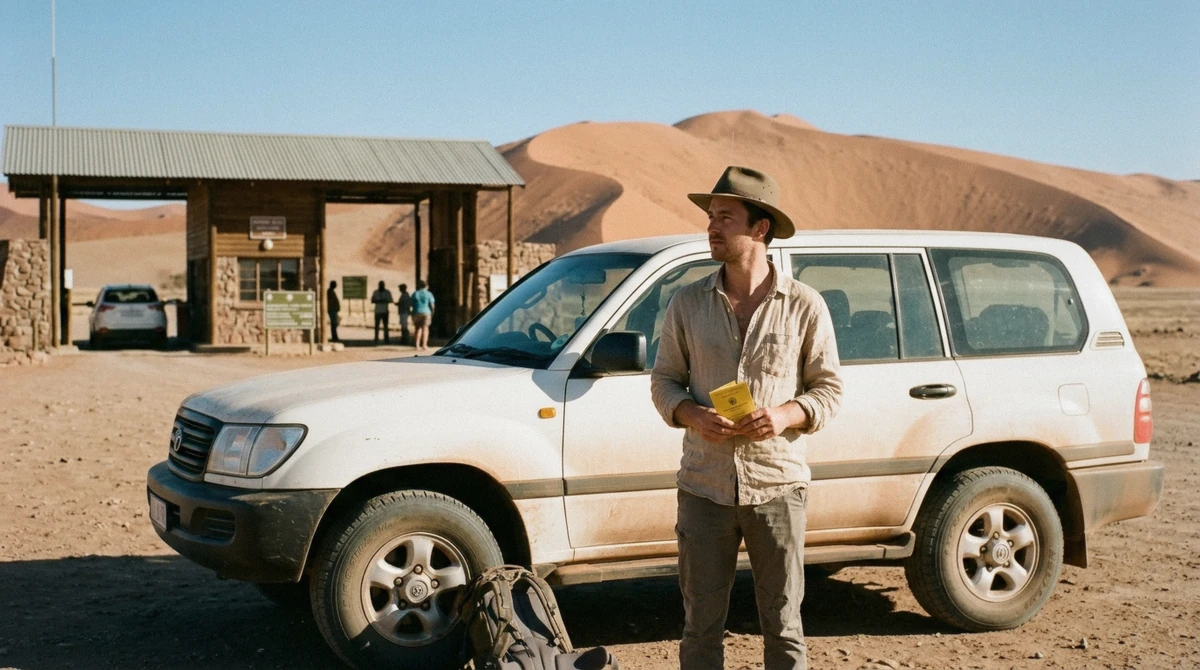
Quick answer
No injection is legally required for most visitors, but both CDC and the UK TravelHealthPro recommend hepatitis A and typhoid vaccination for Namibia, plus up-to-date routine jabs. Malaria is covered by tablets, not injections, and the risk sits in the north, not on the Sossusvlei and Sandwich Harbour routes. Ask a travel clinic at least a month before you fly.
Key takeaways
- Hepatitis A and typhoid are the two recommended vaccines on both the CDC and UK TravelHealthPro Namibia pages
- Yellow fever: no risk in Namibia and CDC says the vaccine is not recommended, but a certificate is required if you arrive from, or spend more than 12 hours in transit in, a country with yellow fever transmission
- Malaria has no vaccine: tablets are advised for the northern regions and Zambezi, while the Namib, Windhoek and the Swakopmund coast are low or no risk, with a tour-by-tour table below
- Rabies is the surprise: UK TravelHealthPro lists rabies in Cape fur seals, relevant to seal-watching and kayak days on the coast
- Park fees are N$280 per foreign adult per day (about $16), so health prep is the cheaper half of the trip budget, see the cost breakdown
- Pregnant? The advice changes, read is it safe to go to Namibia while pregnant
Namibia Tours by Malaria Risk: Low-Risk Namib and Coast First
Three routes that stay in the southern and coastal regions the UK TravelHealthPro page rates as very low malaria risk, from a seal-and-dune kayak day to a two-day Sossusvlei trip. Prices are per person in USD as listed by the operator, and each card shows that operator's own rating.
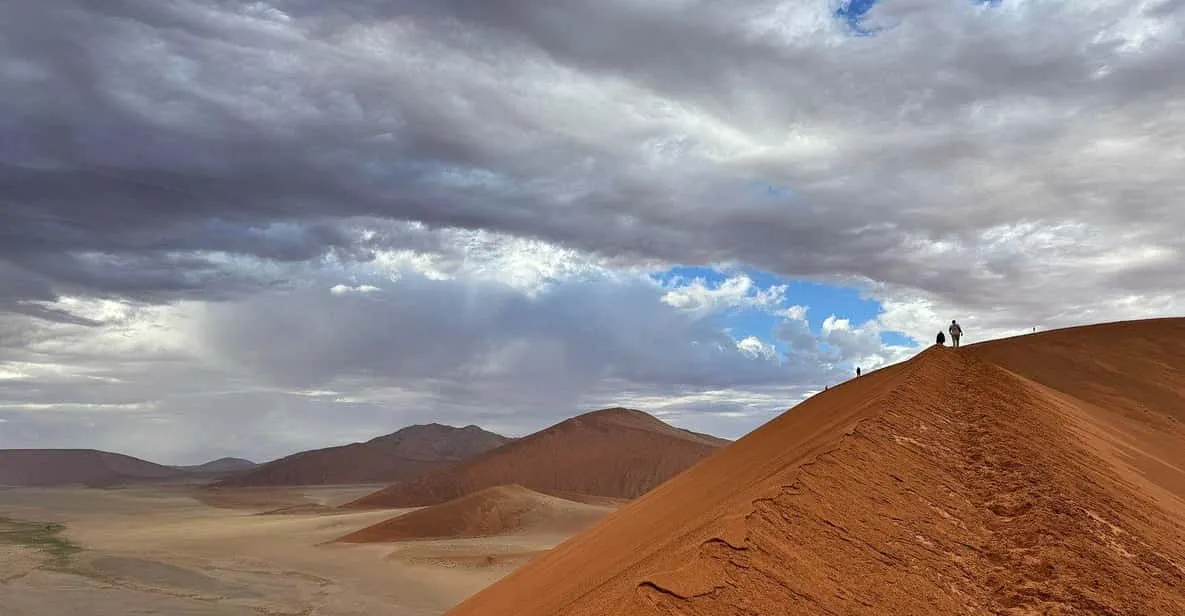 from $705
2-Day Sossusvlei and Sesriem Canyon Tour
Two days lets you climb a dune at sunrise instead of racing the heat: Sossusvlei, Sesriem Canyon and dinner under the desert sky.
Check Availability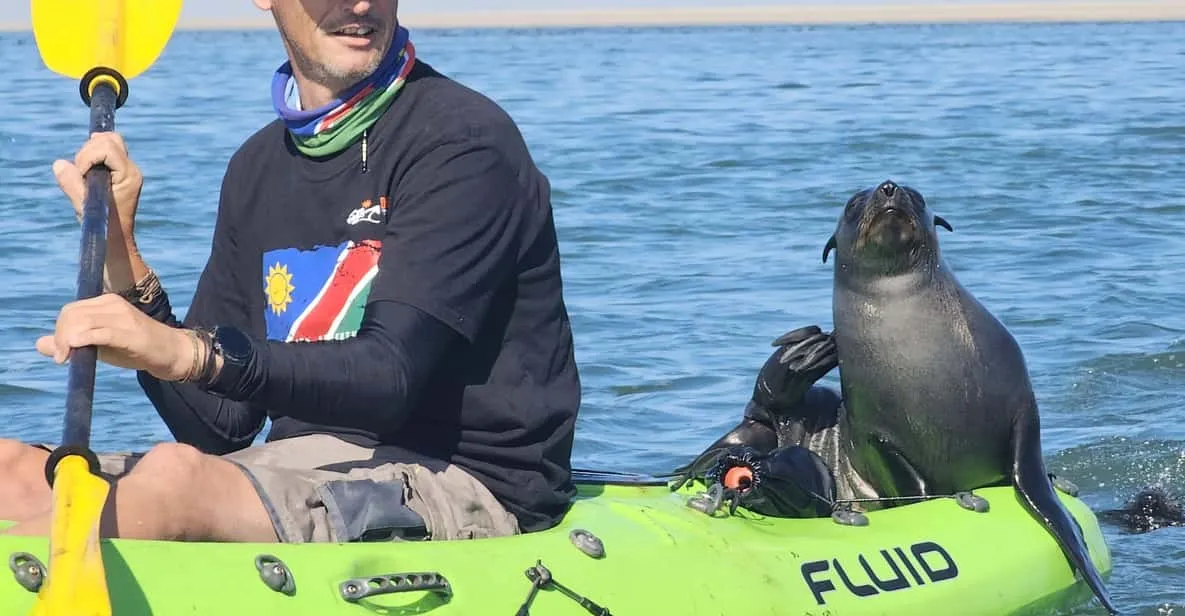 from $246
Kayaking with Seals and Sandwich Harbour Full-Day
Morning paddle among Cape fur seals at Pelican Point, brunch, then the 4x4 dune drive south to Sandwich Harbour. The one day that covers both sides of this coast.
Check Availability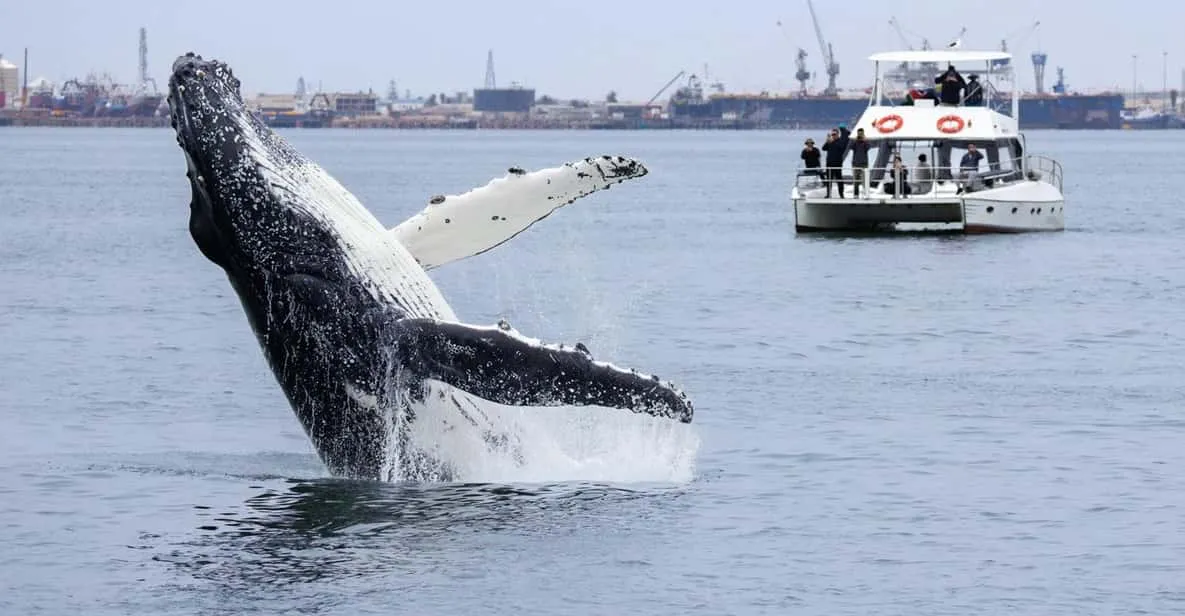 from $81
Walvis Bay Marine Big 5 Catamaran Cruise
Out of Walvis Bay after the ocean five: dolphins, seals, sunfish, leatherback turtles and whales in season. Oysters and sparkling wine on the return leg.
Check AvailabilityWhat Injections Do I Need for Namibia?
Two are recommended for almost everyone: hepatitis A and typhoid. Everything else depends on who you are and what you do. CDC and the UK TravelHealthPro agree on the core list, and the table puts their published wording side by side so you can see where they differ.
A travel clinic turns this list into your own plan.
| Vaccine | CDC Travelers' Health says | UK TravelHealthPro says |
|---|---|---|
| Hepatitis A | Recommended for unvaccinated travelers aged one year or older | Recommended for all previously unvaccinated travellers |
| Typhoid | Recommended for most travelers, not 100% effective | Recommended for most travellers, oral and injectable options |
| Hepatitis B | Recommended for unvaccinated travelers of all ages | Could be considered for all travellers, recommended for increased-risk activities or medical history |
| Rabies | Talk to a healthcare provider about pre-exposure vaccination | Recommended for increased-risk activities, including coastal water sports, and for stays over one month |
| Tetanus | Not listed separately | Booster advised if the last dose was over ten years ago and medical facilities may be limited |
| Yellow fever | Vaccine not recommended | No risk in the country, certificate rule only |
| Routine (MMR, polio, diphtheria-tetanus) | Be up to date before every trip | Keep routine UK vaccines up to date, including MMR |
Source: CDC Travelers' Health, Namibia, UK TravelHealthPro (NaTHNaC), Namibia.
Do I Need a Yellow Fever Vaccine for Namibia?
Not for the country itself, but you may need the certificate. CDC says the yellow fever vaccine is not recommended for Namibia and that it is not required if you travel directly from the United States. UK TravelHealthPro says there is no risk of yellow fever in the country, however there is a certificate requirement. The rule bites when your route touches a risk country. A certificate is required for travellers aged 9 months and over arriving from a country with yellow fever transmission, and that includes an airport transit or layover of more than 12 hours. Under WHO rules a certificate is valid for the vaccinated person's lifetime.
The practical case: you fly in from Europe or North America through a hub outside Africa, and nothing is asked. You fly in from a country with transmission, or you have a long layover in one, and the border officer can ask for the paper. Tell the clinic your exact flight routing so they can tell you which side of the rule you fall on.
| Your route to Namibia | Certificate needed? | Source of the rule |
|---|---|---|
| Direct from the United States | Not required | CDC |
| Via an airport in a country with yellow fever transmission, layover over 12 hours | Required, travellers aged 9 months and over | CDC, UK TravelHealthPro, WHO |
| Arriving from a country with yellow fever transmission risk | Required, travellers aged 9 months and over | CDC, UK TravelHealthPro, WHO |
| Inside Namibia, by road or air | No yellow fever risk, no requirement | UK TravelHealthPro |
Source: CDC Travelers' Health, Namibia, UK TravelHealthPro (NaTHNaC), Namibia, WHO, International travel and health country list.
Do I Need Malaria Tablets for Namibia?
It depends on the region and the month, and there is no malaria injection. UK TravelHealthPro lists a high risk all year in Kavango East, Kavango West and the Zambezi region (including Caprivi), and a high risk from December to April in Kunene, Omusati, Oshana, Ohangwena, Oshikoto, Omaheke and Otjozondjupa, falling to low from May to November. It lists a very low risk in the rest of Namibia. CDC lists transmission regions in the same northern belt, says malaria is rare elsewhere and says Windhoek has none. Etosha sits across Kunene, Omusati, Oshana and Oshikoto, so a safari there falls in the seasonal zone.
The drugs named by both bodies for the risk zones are atovaquone-proguanil, doxycycline and mefloquine (CDC adds tafenoquine). Start dates differ: atovaquone-proguanil one to two days before arrival, mefloquine two to three weeks before, and doxycycline is not suitable for children under 12. CDC notes chloroquine resistance. Where the risk is very low, both advise bite avoidance and awareness, not tablets.
| Where you are going | Month | Malaria risk as published | Advice |
|---|---|---|---|
| Kavango East and West, Zambezi (Caprivi) | All year | High | Tablets, bite avoidance |
| Kunene, Omusati, Oshana, Ohangwena, Oshikoto, Omaheke, Otjozondjupa | December to April | High | Tablets, bite avoidance |
| Same northern regions | May to November | Low | Awareness and bite avoidance |
| Rest of Namibia, including the Namib and the coast | All year | Very low | Awareness and bite avoidance |
| Windhoek | All year | None (CDC) | Bite avoidance as usual |
Source: UK TravelHealthPro (NaTHNaC), Namibia, CDC Travelers' Health, Namibia.
Which Namibia Tours Sit in Which Malaria Zone?
Sossusvlei, Sandwich Harbour and Swakopmund sit in the very-low-risk part of the map, and Etosha does not. That is the practical edge for a trip planner: on the published maps a desert and coast itinerary sits where both bodies advise bite avoidance rather than tablets, while an Etosha add-on enters a zone where a clinic may prescribe them. The Namib-Naukluft and the coast lie in regions that appear on neither the CDC nor the TravelHealthPro risk lists.
The table matches the tours on this site to the regions in the guidance. Whether you take tablets for an Etosha day is a decision for your clinic, because a one-day game drive and a three-night stay are different exposures.
| Route | Where it runs | On the malaria risk lists? | Matching tour |
|---|---|---|---|
| Sossusvlei, Deadvlei, Sesriem Canyon | Namib-Naukluft, southern Namibia | No, rest of Namibia (very low) | Sossusvlei and Deadvlei full-day trip, 2-day Sossusvlei tour |
| Sandwich Harbour and Walvis Bay | Coast, Namib-Naukluft | No, rest of Namibia (very low) | Sandwich Harbour half-day 4x4, Walvis Bay catamaran cruise |
| Swakopmund dunes | Coast | No, rest of Namibia (very low) | Swakopmund quad biking |
| Etosha National Park | North, seasonal-risk regions | Yes, high December to April | Etosha game drive, 3-day private Etosha safari |
| Windhoek | Capital | None (CDC) | Starting point for the Etosha day safari |
Source: UK TravelHealthPro (NaTHNaC), Namibia, CDC Travelers' Health, Namibia.
Do I Need a Rabies Vaccine for Namibia?
Possibly, and the coast is why. UK TravelHealthPro recommends pre-exposure rabies vaccination for travellers with increased-risk activities, naming those participating in water sports along the coastline because of rabies in Cape fur seals. It reports more than 100 rabies cases confirmed in Cape fur seals in Namibia and South Africa since 2024, and the first seal case in Walvis Bay Lagoon was confirmed in 2025. It also recommends it for stays longer than one month. CDC leaves it to you and a healthcare provider.
The rule of thumb on a seal day is the same with or without a jab: stay in the boat or the kayak, never touch or approach a seal on a beach, and report any bite or scratch to a doctor at once. The seal colony at Pelican Point is a highlight of the kayaking and Sandwich Harbour full day and the Walvis Bay catamaran, and operators keep a set distance. Whether that exposure counts as increased-risk for your trip is a question for the clinic.
Which Routine Vaccines and Boosters Matter Before Namibia?
The ones you should hold anyway. CDC says make sure you are up to date on all routine vaccines before every trip, and UK TravelHealthPro lists MMR, diphtheria-tetanus-polio and a tetanus booster if your last dose was over ten years ago. Two outbreak notices add weight. CDC carries a Global Polio notice at Level 2, Practice Enhanced Precautions, that includes Namibia, and a Level 1 Global Measles notice that asks every international traveller to be fully vaccinated against measles. UK TravelHealthPro reports poliovirus detections in environmental samples in Omaheke, Khomas and Kavango. None of these change what a Namib itinerary looks like, but they are the cheapest checks of the whole trip.
A tetanus booster matters because of distance. Canada's advice, quoted on our safety page, says emergency services are limited in many parks, and fuel stops can be 150 km apart. A cut on a gravel road or a dune hike is far from a clinic.
Source: CDC Travelers' Health, Namibia, UK TravelHealthPro (NaTHNaC), Namibia.
How Far Ahead Should You Start, and What Do You Bring?
Start at least a month before you fly, earlier if you want a multi-dose course. CDC's Namibia page says to see a doctor at least a month before the trip, and UK TravelHealthPro's pregnancy factsheet says 6 to 8 weeks for pregnant travellers. Some malaria tablets need a head start, with mefloquine begun two to three weeks before arrival in a risk area. Two doses of hepatitis A or typhoid schedules also take time. A short lead time still helps, so go anyway if you are inside the window. Once the health side is settled, Namib Desert tours are the next step.
Pack the vaccination record, a printed copy of the yellow fever certificate if your route needs one, insect repellent for evening in the north, and travel insurance with medical evacuation cover. The nearest hospital can be a long drive from a lodge, and how to get to Sossusvlei shows the distances, with Windhoek to Sesriem around 350 km and 4 to 5 hours, mostly on gravel.
Source: CDC Travelers' Health, Namibia, UK TravelHealthPro (NaTHNaC), Namibia.
Does Pregnancy Change the Vaccine List?
Yes, in three places. Malaria prevention is decided case by case, yellow fever vaccination is generally avoided on theoretical grounds, and most live vaccines are contraindicated or not recommended, according to UK TravelHealthPro's pregnancy factsheet. Non-live vaccines can be given when medically indicated.
The details, the Zika position and a route that keeps out of the malaria zones are on the pregnancy page. If you are pregnant or trying to be, tell the clinic before any jab is booked.
Are Children's Vaccines Different for Namibia?
The same list applies with age limits. CDC recommends hepatitis A from one year and also for infants of 6 to 11 months, and UK TravelHealthPro says infants from six months who are likely to mix with local people should receive an MMR vaccine. Doxycycline is not suitable under 12, so a paediatric clinic picks the malaria option if a family goes north.
For a family keeping to the Namib, the coast and Windhoek, the malaria question mostly falls away on the published maps. The Sandwich Harbour half-day and the Sossusvlei day trip are the usual family days on the dunes.
Source: CDC Travelers' Health, Namibia, UK TravelHealthPro (NaTHNaC), Namibia.
Questions About Injections for Namibia
Do I need any compulsory vaccine to enter Namibia?
Only the yellow fever certificate, and only if you arrive from, or spent more than 12 hours in transit in, a country with yellow fever transmission. Direct travel from the United States does not require it, per CDC.
Is the hepatitis A vaccine needed for Namibia?
CDC recommends it for unvaccinated travelers aged one year or older and UK TravelHealthPro for all previously unvaccinated travellers. Ask a clinic which doses you still need.
Do I need malaria tablets for the Namib Desert?
Not on the published maps. UK TravelHealthPro rates the rest of Namibia, outside the northern regions, as very low risk and advises awareness and bite avoidance. Etosha is different, see the table above.
Is there a malaria vaccine for travellers?
No. UK TravelHealthPro states that there is no vaccine for travellers, so prevention is tablets plus bite avoidance, decided with a clinic.
Do I need a rabies vaccine for Namibia?
UK TravelHealthPro recommends it for increased-risk activities such as coastal water sports and for stays over a month, citing rabies in Cape fur seals. Ask a clinic if you will kayak among seals.
When should I see a travel clinic?
At least a month before departure, per CDC. Mefloquine starts two to three weeks before arrival in a risk area, per UK TravelHealthPro.
Does the yellow fever certificate expire?
Under WHO rules since 11 July 2016, a certificate is valid for the vaccinated person's lifetime, as UK TravelHealthPro notes.