What Are the Top 5 Animals to See in Namibia?
The top five animals to see in Namibia are the elephant, lion, black rhino, giraffe and gemsbok, and Etosha National Park shows the first four in one trip. What are the top 5 animals to see in Namibia, though? Most visitors want to know where to find each one and when, so this page ranks them with their conservation status, the best waterholes and the days that reach them.
Quick answer
The top five animals to see in Namibia are the elephant, lion, black rhino, giraffe and gemsbok. Four of the Big Five live in Etosha, and the buffalo does not. Etosha covers 22,270 km², and park entry is N$280 per foreign adult per day, about $16. The simplest way to see them is an Etosha game drive from $138, or the 3-day private safari with nights at the floodlit waterhole.
Key takeaways
- Elephant, lion, black rhino and giraffe are all in Etosha, and the gemsbok is the animal of the Namib dunes
- Etosha has four of the Big Five and no buffalo, whose last park record is from the 1950s
- Black rhino come to the floodlit waterholes at Okaukuejo, Halali and Namutoni after dark
- The dry season from May to September concentrates animals at the water
- Park fees are N$280 per foreign adult per day (about $16 at N$17.5 to the dollar), see the cost breakdown
- On the coast, the Walvis Bay cruise adds seals, dolphins and flamingos from $81
Tours That Show Namibia's Top Animals
Three ways to see the animals, from a single drive to a night at the waterhole. Prices are per person in USD as listed by the operator, and each card shows that operator's own rating.
 from $138
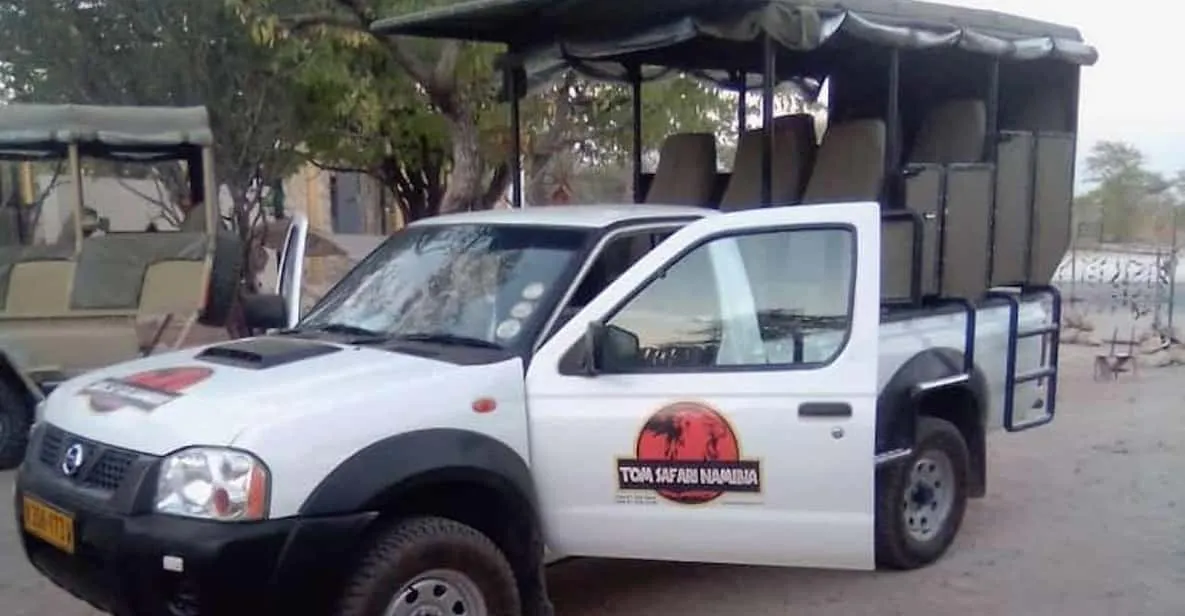
Etosha Game Drive in an Open 4x4 — Half or Full Day
An open-vehicle game drive from Okaukuejo with a professional guide. Choose the half day or stay out for the full one; waterholes are the payoff either way.
Check Availability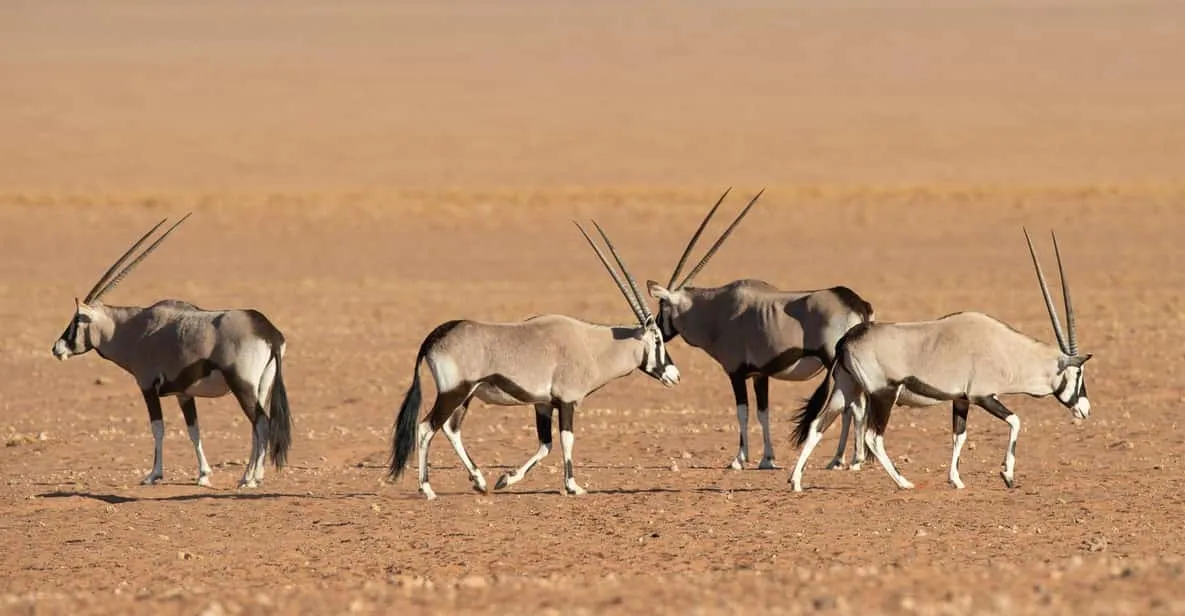 from $1630
3-Day Private Etosha Safari from Windhoek
Private guide, three days, and nights at Okaukuejo — the camp with the floodlit waterhole where black rhino come in after dark.
Check Availability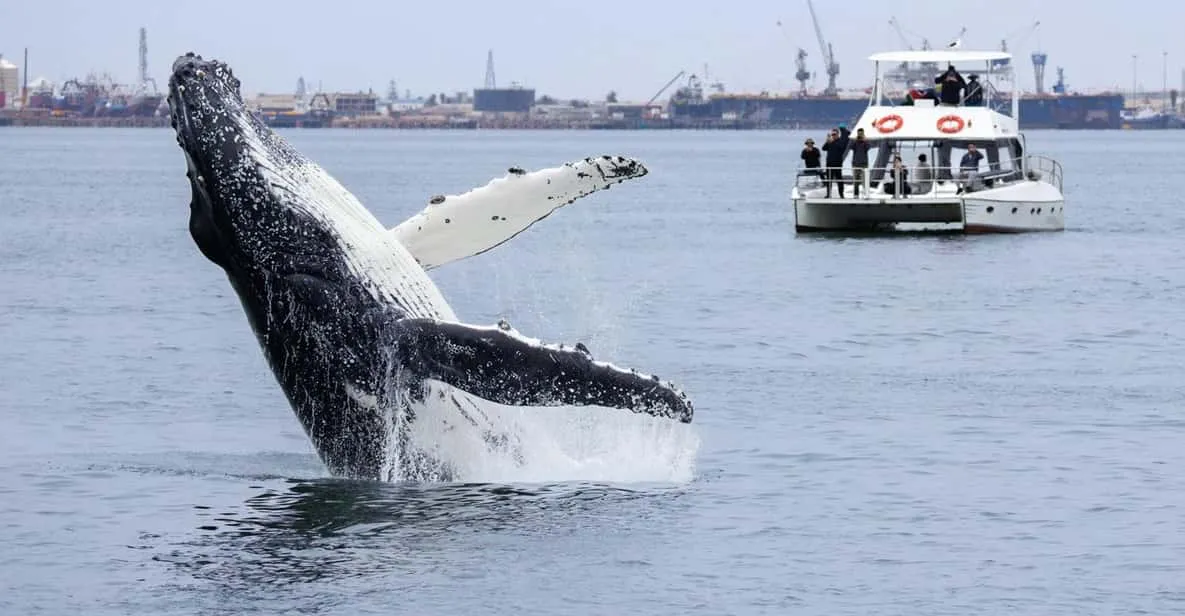 from $81
Walvis Bay Marine Big 5 Catamaran Cruise
Out of Walvis Bay after the ocean five: dolphins, seals, sunfish, leatherback turtles and whales in season. Oysters and sparkling wine on the return leg.
Check AvailabilityWhat Are the Top 5 Animals to See in Namibia?
The five animals most worth planning a Namibia trip around are the African elephant, the lion, the black rhino, the giraffe and the gemsbok, also called the oryx. Four of them live in Etosha National Park, and the fifth, the gemsbok, is the one you meet in the dunes of the Namib. The list is ranked by how much each animal adds to a trip and how likely you are to see it, not by size alone.
The table gives each animal's best place, how common it is in Etosha and its global conservation status.
| Animal | Best place to see it | Etosha status | IUCN status | How to see it |
|---|---|---|---|---|
| African elephant | Etosha waterholes, Okaukuejo and Halali | Common | Endangered (savanna elephant) | Open-vehicle game drive in Etosha |
| Lion | Etosha plains, often resting near waterholes at dusk | Common | Vulnerable | Dry-season waterhole circuit, see the Etosha waterhole safari |
| Black rhino | Floodlit waterholes at Okaukuejo, Halali and Namutoni after dark | Rare | Critically Endangered | Night at a camp, as on the 3-day private Etosha safari |
| Giraffe | Etosha, Angolan giraffe, browsing acacia and mopane | Common | Vulnerable | Any Etosha game drive |
| Gemsbok (oryx) | Sossusvlei dunes, Sandwich Harbour and the open Namib | Not listed in the Etosha table | Widespread in the Namib | Dune days such as the Sossusvlei and Deadvlei trip |
Source: Wikipedia, Etosha National Park, IUCN, African savanna elephant, IUCN Red List, giraffe.
What Are the Big 5 Animals in Namibia?
The Big Five are the lion, leopard, elephant, rhino and Cape buffalo, and Namibia's main park, Etosha, has four of them and no buffalo. The last known buffalo record in Etosha dates from the 1950s. Black rhino and white rhino both count as the rhino slot, although the white rhino is very rare in Etosha and was reintroduced after a long absence.
Buffalo live elsewhere in the country, in the parks of the Zambezi Region in the north-east, which is a separate trip from the desert and Etosha. For most visitors the practical answer is that Namibia gives you four of the five on one route, with the leopard the hardest to find. The table shows how each Big Five animal stands in Etosha.
| Big Five animal | In Etosha? | What to expect |
|---|---|---|
| Lion | Yes, common | Seen on the open plains, most often near waterholes |
| Leopard | Yes, listed as common | Shy and mostly nocturnal, so a sighting is luck rather than a plan |
| Elephant | Yes, common | Herds arrive at waterholes through the dry season |
| Black and white rhino | Black rare, white very rare | Black rhino are easiest at the floodlit camp waterholes after dark |
| Cape buffalo | No, extinct in the park | Zambezi Region parks in the north-east |
Source: Wikipedia, Etosha National Park, Wildlife of Namibia, Wikipedia.
Where Can You See Elephants in Namibia?
Etosha is the most reliable place to see elephants in Namibia, especially at the waterholes in the dry season from May to September. Herds come in to drink through the middle of the day, and the Okaukuejo camp waterhole puts them within easy view without leaving the camp. The African savanna elephant is listed as Endangered on the IUCN Red List, so every sighting is of an animal under real pressure.
In the north-west, in the Kunene region, a separate group lives in desert country. They are not a different species, but they have adapted to the dry terrain and can go days between water sources, which makes them a special target for guided trips. Reaching them is a multi-day expedition away from the Namib dunes and the coast that most visitors of this site come for.
For a first sighting, the easiest booking is a half-day open-vehicle drive from Okaukuejo for $138, which runs from 5 to 10 hours depending on whether you choose the half or the full day.
Source: IUCN, African savanna elephant, Wikipedia, Etosha National Park.
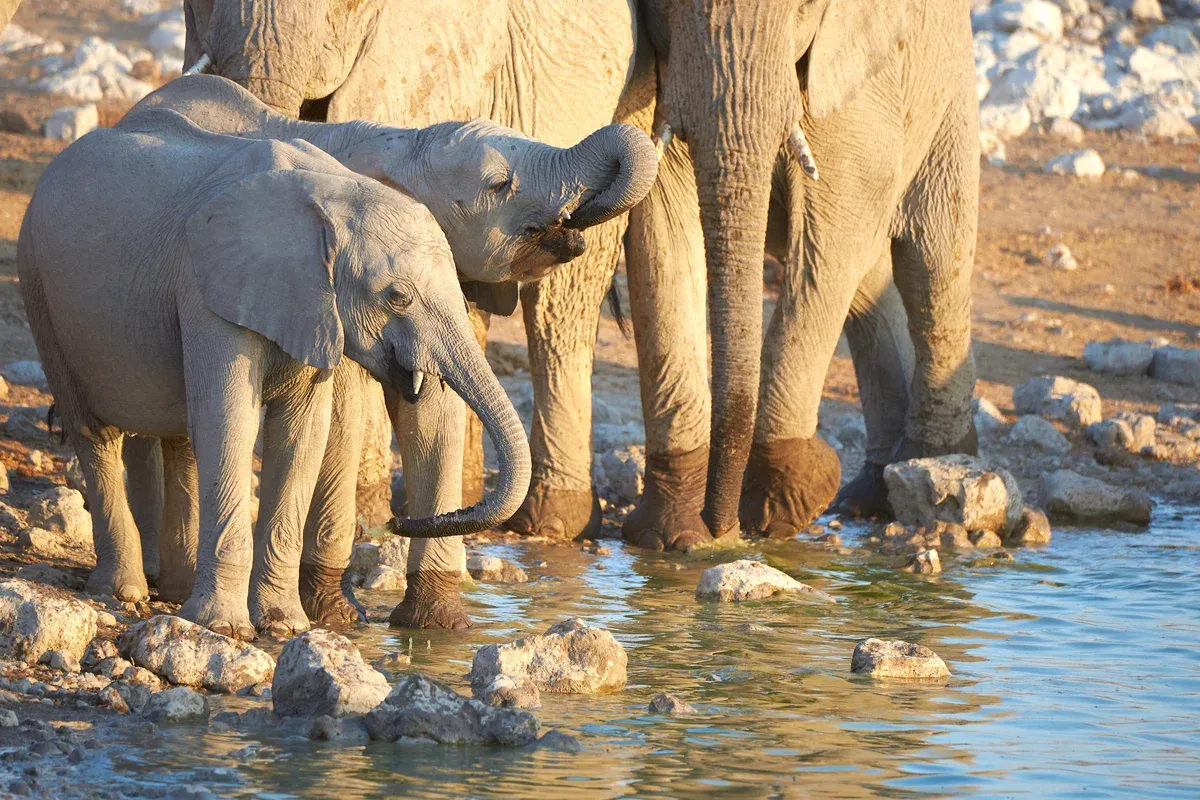
Elephants at the Okaukuejo waterhole in Etosha. Photo: Axel Tschentscher, CC BY-SA 4.0, via Wikimedia Commons
Where Can You See Lions in Namibia?
Lions are common in Etosha and are the animal most visitors place second on their list after elephants. They hunt on the open plains around the pan and rest in the shade of mopane and acacia during the day, so the best chance is early morning and late afternoon when you are driving the waterhole circuit. The lion is listed as Vulnerable on the IUCN Red List.
The sightings are not guaranteed, because the park is 22,270 km² and the animals move. A guide helps more with lions than with any other animal, since guides share radio sightings and know which waterholes the prides use at that time of year. Off-road driving is banned in Etosha and you stay in the vehicle outside the marked camps, so a lion that walks away from the road is out of reach.
The Etosha waterhole safari is built around the dry-season waterhole circuit for $138, and it is the cheaper way to give yourself a second chance at lions compared with a night-stay itinerary.
Source: IUCN Red List, Wikipedia, Etosha National Park.
Can You See Black Rhino in Namibia?
Yes, and Etosha is the place to do it, although black rhino is rated rare in the park and the species is Critically Endangered on the IUCN Red List. The most dependable sightings come after dark at the floodlit waterholes at Okaukuejo, Halali and Namutoni, where rhino arrive to drink once the heat has gone. That is the reason a night inside the park, rather than a single day trip, changes your odds.
Namibia holds about one third of Africa's black rhinos according to WWF, and the Kunene region in the north-west is the main area for tracking them on foot with guides. That is a different trip from the dunes, so for a desert-and-wildlife itinerary the floodlit camp waterhole is the practical choice.
The 3-day private Etosha safari includes nights at Okaukuejo, the camp with the floodlit waterhole where rhino come in after dark, and it costs $1,630 for the three days.
Source: IUCN Red List, WWF, Rhino populations are recovering in Namibia, Wikipedia, Etosha National Park.
Are Giraffe, Gemsbok and Springbok Easy to See in Namibia?
Yes, all three are widespread, and they are the animals you will see on almost every day of the trip. Giraffe are common in Etosha, and the park's giraffe are the Angolan subspecies. The giraffe is listed as Vulnerable on the IUCN Red List, but in Etosha they browse openly along the roads and at the waterholes.
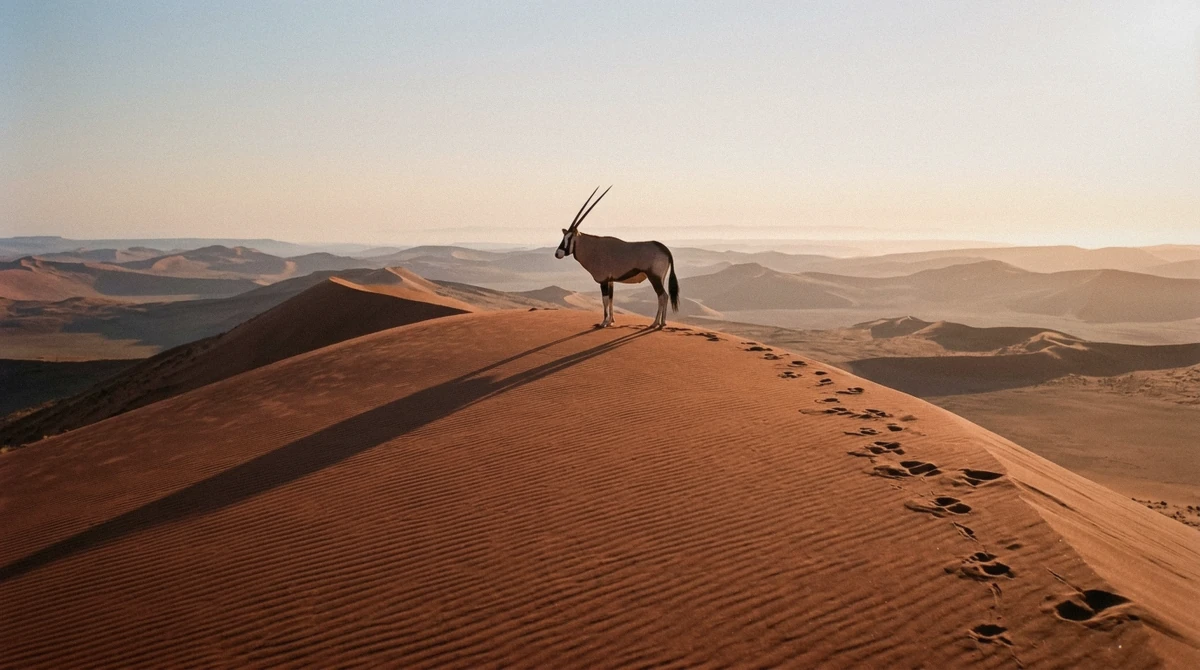
The gemsbok is Namibia's most iconic desert animal. It appears on the national coat of arms and handles the dune country of Sossusvlei and the gravel plains with almost no water. The best-known picture is a gemsbok crossing a dune ridge at sunrise, which is why a dawn start at Sossusvlei matters for photographers. See Namib Desert photo spots for where to stand.
The springbok is the most numerous antelope across the Namib and the central plains and is easy to spot from any road. The springbok is listed as Least Concern on the IUCN Red List, with its numbers rising. On the coast, a guided 4x4 tour with wildlife stops at Sandwich Harbour adds oryx, springbok and black-backed jackal on the dunes, and the brown hyena is possible there too.
Source: Wildlife of Namibia, Wikipedia, IUCN Red List, giraffe, IUCN Red List, springbok.
What Other Animals Are Worth Seeing in Namibia?
Cheetah, leopard, Cape fur seals, flamingos and the marine species off Walvis Bay are the next tier, and several of them are easier to reach than the Big Five. Namibia has the largest population in southern Africa of cheetahs living outside national parks, and the cheetah is listed as Vulnerable, but a sighting inside Etosha is only rated uncommon. The seal colony at Cape Cross Seal Reserve is named among the country's three main wildlife tourist attractions.
The coast is the easiest wildlife day for anyone based in Swakopmund. Walvis Bay Lagoon is a Ramsar site with over 150,000 birds and flamingo numbers that peak near 50,000. The Walvis Bay Marine Big 5 catamaran cruise goes after dolphins, seals, sunfish, leatherback turtles and whales in season for $81 over 3.5 hours, which makes it the cheapest guided wildlife outing on the site.
The table lists the next five animals and where each one is found.
| Animal | Where | Status or note |
|---|---|---|
| Cheetah | Etosha and farmland outside the parks | Uncommon in Etosha, Vulnerable (IUCN) |
| Leopard | Etosha, mostly at night | Common in the Etosha table, shy in practice |
| Cape fur seal | Cape Cross Seal Reserve and the Walvis Bay cruise | Colony animals seen from the boat or reserve |
| Greater flamingo | Walvis Bay Lagoon | Over 150,000 birds on the lagoon, flamingos peak near 50,000 |
| Brown hyena and black-backed jackal | Sandwich Harbour, 42 km south of Walvis Bay | Seen on guided 4x4 days, no self-drive |
Source: Wildlife of Namibia, Wikipedia, Ramsar Sites Information Service, IUCN Red List, cheetah.
When Is the Best Time to See Animals in Namibia?
The dry season from May to September is the best time for Etosha, because the animals gather at the waterholes and the vegetation is thin. Days are around 27°C (81°F) and mornings are cold at 5 to 7°C (41 to 45°F) on the plains, so pack layers, as set out in what to pack for the Namib Desert. Etosha gets 418 mm of rain a year and almost all of it falls between November and April, so in the green season animals spread out and are harder to find.
The coast and the dunes do not follow this pattern. Swakopmund and Walvis Bay stay between 15 and 25°C (59 to 77°F) in every month, and Sandwich Harbour is governed by the tide rather than the season. For the full month-by-month view, read the best time to visit the Namib Desert.
Malaria risk in the Etosha regions is high from December to April and low from May to November, per UK TravelHealthPro. The vaccine and prevention questions are covered in what injections you need for Namibia.
| Month | Etosha animals | Coast and dunes |
|---|---|---|
| May to September | Best, animals concentrate at waterholes | Cool and foggy on the coast, cold dawns at Sossusvlei |
| October | Good, very dry and hot | Dune climbs finished by about 9 am |
| November to March | Harder, animals spread out after rain | Sossusvlei up to 40°C (104°F), coast mild |
| April | Waterholes start to dry again | Pan may hold water in years of good rain |
Source: Namibia Tourism Board, Wikipedia, Etosha National Park, UK TravelHealthPro, Namibia.
Can You See Namibia's Animals Without a Guide?
You can, but the animals you see will depend on the time you spend at the waterholes and how well you read the signs. Etosha is a self-drive park. Gates open at sunrise and close at sunset, off-road driving is banned and you stay in the vehicle outside the marked camps. Park fees are N$280 per foreign adult per day, about $16 at N$17.5 to the dollar, plus N$60 per vehicle of up to 10 seats, per Government Gazette No. 8877. Those fees are charged per calendar day, not per 24 hours.
A guided drive adds the one thing self-drive cannot buy, which is current knowledge of where the lions and rhino are. The guided Etosha options from this site run from $138 for a half or full day to $423 for a one-day safari from Windhoek and $1,630 for three days. Tours usually include the park fees, so read the listing before adding them twice.
For the dunes of Sossusvlei, the Sesriem gate closes one hour after sunset, per Namibia Wildlife Resorts, so plan the drive back before the light drops. The comparison of driving versus joining a tour is in self-drive versus guided at Sossusvlei, and a wider choice of days is in the best Etosha tours.
| Way to see the animals | Price | Time | Best for |
|---|---|---|---|
| Open-vehicle game drive from Okaukuejo | $138 | 5 to 10 hours | Elephant, lion, giraffe at the waterholes |
| Waterhole safari | $138 | 5 to 10 hours | Dry-season waterhole circuit |
| Etosha day safari from Windhoek | $423 | 1 day | Only one day to spare, long drive |
| 3-day private Etosha safari | $1,630 | 3 days | Floodlit waterhole nights, black rhino |
| Self-drive | N$280 per adult per day, about $16, plus N$60 per vehicle | Your own pace | Experienced gravel drivers |
Source: Government Gazette No. 8877, Namibia Wildlife Resorts, Sesriem gate times.
Which Animals Should You Choose If You Only Have a Few Days?
If you have a few days in the desert region, pick the animal that matches your base. From Swakopmund and Walvis Bay the gemsbok, springbok, seals, flamingos and dolphins are all within a day. From Windhoek the day trip reaches Etosha but spends most of the time on the road, so it suits only those who cannot give Etosha a night. If you can add two nights, stay inside the park for the waterhole after dark.
A useful rule is one animal story per day. A dawn dune with a gemsbok, then a cruise, then a seal colony fills three days on the coast. Etosha is its own two-day block. How the two fit together is worked through in how many days Namibia needs, and what each wildlife stop is best at is ranked in the best safari destination in Namibia. If you are weighing a neighbour for a wildlife-only trip, see Namibia or Botswana for a safari.
Once you know your base, compare the full range of Namib Desert tours in one place.
Questions About Animals in Namibia
Which animals are the Big 5 in Namibia?
Lion, leopard, elephant and rhino are in Etosha, and the Cape buffalo is not, as the last record in the park is from the 1950s. Buffalo live in the Zambezi Region parks in the north-east.
What is Namibia's national animal?
The gemsbok, or oryx, appears on the national coat of arms and is the animal most associated with the Namib dunes.
Can you see lions on a Namibia desert tour?
Rarely in the dunes. Lions are an Etosha animal, so book an Etosha game drive rather than a Sossusvlei day.
Is the Namib Desert good for wildlife?
Yes, in a quiet way. Gemsbok, springbok, jackals and hyenas live there, and the coast adds seals, flamingos and marine animals, for example on a Sandwich Harbour 4x4.
What is the cheapest way to see wildlife in Namibia?
The Walvis Bay catamaran cruise at $81 for 3.5 hours, or a self-drive in Etosha for N$280 per adult per day, about $16, plus N$60 per vehicle.
Do you need a guide for black rhino?
Not at Etosha's floodlit waterholes, where you can watch from the camp. In the Kunene region, tracking on foot needs a guide.
Is it safe to look for animals in Etosha?
Yes if you follow the rules. You stay in the vehicle outside the camps and never drive off the road, and the current travel advice is in is it safe to visit Namibia now.